


**New £150m Funding Package to Protect Jobs at Grangemouth**
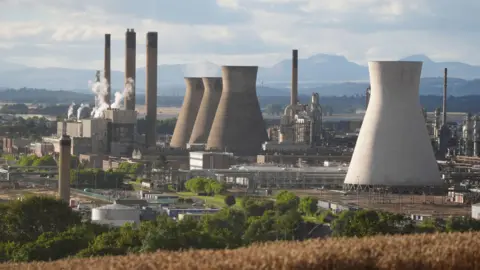
In a move aimed at bolstering the industrial landscape in the UK, a significant funding initiative has been unveiled for the Grangemouth industrial complex, revealing a joint investment of £150 million. This financial package represents a concerted effort from both the UK Government and Ineos, the petrochemical plant’s operators, to secure jobs and sustain the economic stability of the region. The UK Government is poised to invest £125 million, supported by Ineos’s contribution of £25 million, an initiative set to safeguard approximately 500 jobs at this pivotal site.
Scottish Secretary Douglas Alexander emphasized the importance of this funding while drawing a stark contrast to the fate of the Mossmorran chemical plant, which has faced closure due to a lack of investment, resulting in the potential loss of up to 400 jobs. This timely intervention at Grangemouth is not merely a financial lifeline; it is described by Mr. Alexander as “bridging finance” intended to ensure the plant’s profitability following an extensive £100 million investment over the past year. Furthermore, he reassured that Ineos has committed to five years of ethylene production at the plant—a significant measure, as Grangemouth is the last ethylene production facility in the UK.
Ethylene, a vital ingredient used extensively across various manufacturing sectors, from automotive to aerospace, forms the backbone of the products fabricated at Grangemouth, including propylene, polyethylene, and polypropylene. These materials find their way into an assortment of consumer goods such as packaging, insulation, and healthcare products, affirming the plant’s role in meeting both domestic and global demands.
Prime Minister Sir Keir Starmer articulated support for the initiative, asserting that the funding aims to protect vital jobs and ensure the long-term viability of regions like Grangemouth. His commitment to bolstering British industry was clear: “Our commitment is clear; to back British industry, to stand by hardworking families, and to ensure places like Grangemouth can thrive for years to come,” Starmer remarked.
Following the announcement, significant negotiations have occurred concerning potential financial structures. The UK Government disclosed that £75 million of the funding would be provided through a loan facilitated by NatWest, backed by a government guarantee. The remaining amount is structured as a grant, which, along with Ineos’s equity, rounds off the £150 million total funding.
Chancellor Rachel Reeves underscored the importance of this financial package during her visit to the plant alongside Mr. Alexander and Business Secretary Peter Kyle, reiterating its role in securing livelihoods for locals and enhancing Britain’s manufacturing industry. “Building on the millions of pounds we’ve already invested in Grangemouth, this vital package protects our national resilience and secures the livelihoods of hundreds of people employed at the site way into the future,” she stated.
Despite the optimism surrounding the Grangemouth investment, critical voices have emerged regarding the broader picture of the UK chemical industry. Concerns have amplified following ExxonMobil’s announcement of closures and job losses at rival facilities like Mossmorran, suggesting the industry is contending with dire circumstances marked by high energy costs and insufficient investments.
Alexander condemned ExxonMobil for its lack of foresight, contrasting it with the proactive engagement exhibited by Ineos, which had previously invested heavily in Grangemouth. Meanwhile, Sir Jim Ratcliffe, chairman of Ineos, lauded the funding as essential in ensuring the continuity of high-value jobs and industrial capacity, reinforcing the need for competitive and low-carbon manufacturing in the UK.
As the industrial landscape undergoes significant transitions, stakeholders, including local community representatives like Grangemouth community councillor Steven Aitkenhead, have expressed cautious optimism. The recent investments symbolize not just a financial uplift but a glimmer of hope in a community grappling with socio-economic challenges.
The Scottish Government’s climate and energy secretary Gillian Martin viewed the funding as a crucial boost for local workers and communities, hoping this investment would pave the way for future developments in green energy and sustainable practices.
Moving forward, it is essential for both the UK and Scottish governments to ensure that the agreed figures are honored and effectively utilized to develop Grangemouth while addressing the overarching issues facing the UK’s petrochemical industry, with the aim of leading the charge toward a more sustainable future.