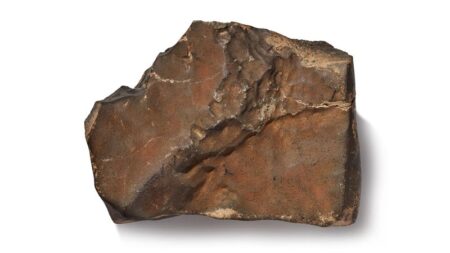



The moon, our celestial neighbor, has recently unveiled new insights following China’s Chang’e-6 mission, which marks an exciting development in lunar exploration and scientific understanding. This mission, which successfully returned with lunar soil and rock samples from the moon’s far side, has provided the scientific community with rich new data to analyze, greatly enhancing our understanding of the moon’s geological history.
In June 2023, the Chang’e-6 mission made history as the first to collect and return lunar soil from the far side, bringing back approximately 1.9 kilograms (4.2 pounds) of lunar material. This incredible feat has established China as a significant player in global space exploration. The findings reported in the journals Science and Nature center around analyses that suggest the existence of volcanic activity on the moon’s far side dating back around 2.8 billion years. This insight is groundbreaking as it highlights geological processes that had not been documented through samples returned by earlier NASA Apollo missions and Soviet Luna missions.
The volcanic materials returned by Chang’e-6 indicate a more recent volcanic episode than previously known lunar samples from the nearby side of the moon. Specifically, these samples are considerably younger than the Apollo samples, which were over 3 billion years old, and align more closely with the 2 billion-year-old near-side samples collected by China’s Chang’e-5 mission in 2020. Notably, the Chang’e-6 basalt samples lacked the radioactive elements characteristic of many Apollo samples. As Clive Neal, a professor at the University of Notre Dame and a coauthor of one of the key studies, states, the absence of these elements raises critical questions about the magmas’ generation processes.
Diving deeper, the Apollo lunar samples generated a comprehensive narrative about the moon’s formation and history, suggesting that it once had an expansive ocean of magma. However, with the new findings, Richard W. Carlson, a staff scientist emeritus at the Carnegie Institution for Science, expressed concerns about the validity of this lunar history being uniformly applicable across the moon.
The Chang’e-6 mission landed within the South Pole-Aitken basin, an enormous impact crater that dates back to approximately 4 billion years. This strategic landing site allows researchers to explore the differences between the lunar far and near sides, a subject of intrigue among scientists. The lunar near side, which is always facing Earth, has been more easily studied due to its accessibility. In contrast, earlier remote sensing indicated that the far side possesses distinct geological features, including a thicker crust and differing basalt distributions.
The recent studies show that scientists analyzed over a hundred basalt fragments, revealing that most of them formed about 2.8 billion years ago. Interestingly, one fragment indicates volcanic activity from 4.2 billion years ago. These findings suggest that the moon remained molten for an extended period, a characteristic not linear with its comparatively small size.
Both published studies also reported a depletion in potassium, rare-earth elements, and phosphorus, abbreviated as KREEP, found in many Apollo-era samples. The presence of KREEP in lunar geology is notable for its role in generating heat, which could explain prolonged volcanic activity. This absence in Chang’e-6 samples prompts further exploration into what driven the volcanic processes on the far side of the moon.
While these initial analyses shed light on intriguing questions, researchers are encouraged to study more samples to develop a complete understanding of the lunar geological narrative. Collaboration between international scientists continues to thrive as the China National Space Administration opens opportunities for global researchers to study the lunar materials, marking an unprecedented era in lunar research.
NASA, despite historical legislative barriers, is poised to coordinate closely with U.S. researchers seeking access to both Chang’e-5 and the recent Chang’e-6 samples. As Neil indicated, international participation is already occurring within collaborative teams to delve deeper into the fascinating mysteries of the moon’s volcanic history and its implications for understanding broader planetary processes in our solar system.
In summary, the recent findings from the Chang’e-6 mission reveal that our understanding of the moon’s geological history is continually evolving. This ongoing research emphasizes the need for an inclusive scientific dialogue as we seek to understand the past and future of our closest celestial neighbor.