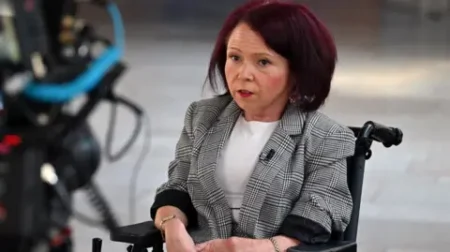




In a poignant revelation that has captured public attention, former **EastEnders** actress **Cheryl Fergison** has openly shared her struggles with finances and her reliance on food banks after her time on the popular BBC soap. Fergison, known for her portrayal of **Heather Trott**, has expressed the emotional turmoil she faced when dealing with the stark contrast between her past success and her challenging present circumstances.
Fergison, 60, recounted how her financial challenges took a severe turn following her diagnosis with womb cancer in 2015. This health setback not only forced her to step away from her acting career but also led her down a difficult path. As she shared in her interview with the **Sunday Mirror**, the experience of having to visit a food bank was particularly harrowing. “It was one of the hardest things I’ve had to do. I found it so difficult to be vulnerable,” she reflected, underscoring the emotional weight of the situation. The actress had undergone a hysterectomy and subsequently experienced early menopause, which exacerbated mental health issues, including self-harming tendencies.
In her darkest moments, Fergison spoke of her obsession with trying to rid herself of cancer, confessing to self-harming practices such as scalding herself with hot water. “I was damaging myself so badly,” she recounted, admitting that the psychological ramifications of her illness were as challenging as the physical aspect. After receiving the all-clear, she began to address the mental health issues that had developed alongside her physical ailments.
By February 2023, Fergison found herself in dire financial straits, struggling to afford basic necessities. “I didn’t have any money to do a weekly shop,” she said, describing a desperate period where she was overwhelmed by debt. The actress noted how far removed her current reality felt from her time on **EastEnders**, where she previously enjoyed financial security and could afford to live without considering prices.
With no option left, Fergison sought assistance from **Citizens Advice**, which eventually led her to a local food bank. Her experience there was both shocking and eye-opening. “I sat there and cried and cried,” she admitted, feeling a deep sense of shame at her situation. “How could I have been on EastEnders? How could I have been earning that much money and now I am here?” This encounter did not just affirm her vulnerability but also highlighted the broader issue of financial insecurity that affects many people across the UK.
Interestingly, a report from the **Living Wage Foundation** states that over half of low-paid individuals in London have been compelled to utilize food banks in the past year, illustrating that the struggles Fergison faced are not isolated incidents but part of a larger societal trend. Fergison found solace in the support she received from the food bank staff, describing them as “angels” who uplifted her during a challenging period. Leaving with bags full of groceries, she expressed gratitude for the unexpected kindness she encountered.
Despite her struggles, Fergison has made efforts to regain financial stability, including gigs singing in restaurants and performing in pantomimes. Through her story, she hopes to shed light on the stigma surrounding food banks, encouraging others not to feel embarrassed for seeking help. “Food banks are a service,” she emphasized, advocating for the right to support during tough times. Her message is clear: seeking assistance during hardship should be viewed as a strength rather than a weakness.
Statistics reveal a troubling landscape in the UK, where a record **9.3 million people** are facing hunger and hardship, with one in five children affected. Organizations like the **Trussell Trust** continue to advocate for systemic change while providing immediate relief to those in need. Helen Barnard, director at the Trussell Trust, commended Fergison for sharing her experiences, advocating for a future where no one has to endure such struggles. Her brave disclosures have the potential to inspire change and encourage discussions about food insecurity, the right to dignified living, and the importance of community support.