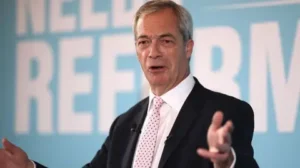


Stephen Flynn, the SNP’s leader at Westminster, has publicly expressed his disappointment regarding the internal party unrest over his decision to contest the impending 2026 Scottish Parliament elections. His remarks highlight the unfortunate nature of party divisions as he navigates his political aspirations, which could potentially change the dynamic within the SNP.
Currently, Flynn serves as the Member of Parliament for Aberdeen South in the House of Commons. Recently, he made waves within party circles by announcing his intent to stand for the Holyrood constituency of Aberdeen South and North Kincardine, a seat presently occupied by SNP’s Audrey Nicoll. This decision has not only attracted attention but has also sparked discontent among his party colleagues. Flynn affirmed his commitment to retain his Westminster seat until the next general election scheduled for 2029, while he emphasized he would not accept dual parliamentary salaries, showcasing his intention to avoid conflicts regarding remuneration.
The backlash from within the SNP regarding Flynn’s announcement was reportedly intense. During an interview on BBC Scotland’s “The Sunday Show,” Flynn stated, “None of this is particularly edifying for anyone,” expressing his reluctance to engage in public defenses concerning his ambitions. He proceeded to describe the political scene as unpleasant, underscoring the reality that political endeavors often lead to divisive reactions, particularly when they involve challenging established party members.
In a notable exchange with Nicoll, whom he informed of his intentions before announcing his candidacy, Flynn confirmed that she was not notably surprised by his plans. He described their conversation as cordial, but a source close to Nicoll suggested that there was an “underlying inference” that he implied for her to step aside, fueling the tensions further. Additionally, Flynn revealed that extenuating circumstances within Aberdeen, particularly involving Nicoll’s husband and his critiques of the party’s local governance, complicated the situation.
In a broader context, the SNP has previously altered its internal policies to impose restrictions on dual mandates prior to the 2021 election. This decision aimed at preventing certain members, such as the outspoken Joanna Cherry, from participating in elections for both Westminster and Holyrood simultaneously. The party’s National Executive Committee (NEC) now finds itself facing the decision of whether to abolish this rule for the 2026 elections. Flynn, reflecting on the current regulations, mentioned that he believed the stipulations were “election specific.”
John Swinney, the First Minister of Scotland, commented on Flynn’s situation, confirming that the SNP had yet to reach a conclusion on dual mandate policies. Swinney alluded to his own experiences with dual mandates earlier in his career, stating that the SNP would need to deliberate on the pertinent issues before arriving at a definitive stance.
As Flynn continues to carve out his political future, the weight of his ambitions casts a shadow on existing party dynamics. While he may be seen as a potential contender for future leadership within the SNP, he humbly noted that any leadership contest would not be imminent. Furthermore, Flynn’s insistence on maintaining his position in Westminster was partly to sidestep triggering a by-election, an endeavor that would be costly and potentially disruptive.
On recent occasions, Flynn has also defended his party colleagues, notably Health Secretary Neil Gray, against criticisms related to their professional engagements outside of their political duties. Gray faced scrutiny for utilizing a ministerial car to attend football matches but Flynn maintained that these activities align with building crucial relationships within the realm of sports and governance.
As the landscape of Scottish politics continues to evolve, Flynn’s assertions and the reactions they provoke serve as a testament to the internal conflicts and broader challenges facing the SNP. The next few months are crucial as the party navigates its internal policies and prepares for the upcoming elections, with Flynn’s future role at the forefront of this political narrative.