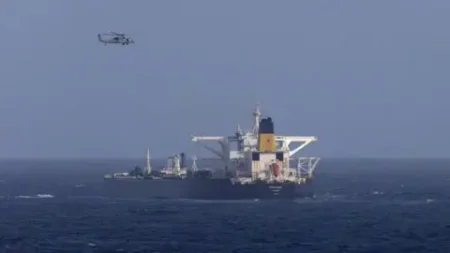




The MV Hebridean Isles, a significant lifeline ferry in Scotland, has officially been retired after nearly four decades of dedicated service to the communities it connected across the islands. With its last departure from Stornoway on a poignant Sunday, the ferry blew two blasts of its horn in a sending-off ceremony before heading towards a shipyard in Glasgow, where it will ultimately face dismantling. The vessel, hailed as one of the oldest in its class, has held a special place in the hearts of the islanders who relied on its regular services for both social and economic connections.
Launching its storied career in July 1985 from the Cochrane Shipyard in Selby, North Yorkshire, the MV Hebridean Isles was notably christened by the Duchess of Kent, marking it as the first Caledonian MacBrayne vessel to receive such a royal honor. The ceremony was highlighted by two pipers playing the “Skye Boat Song,” embedding cultural significance in the ferry’s beginnings. Retailing at £5.5 million, the ferry was state-of-the-art for its time, introducing a new standard of comfort for ferry travel in Scotland.
For over 15 years, the MV Hebridean Isles operated the “Uig Triangle,” linking the islands of Skye, North Uist, and Harris, before shifting its operations to the route to Islay. Throughout its lifespan, it traversed several significant Scottish ferry routes, bolstering the local economies and allowing residents and visitors alike to enjoy the stunning landscapes and welcoming communities of the isles. The ferry was more than just a means of transport; it often provided a venue for charitable events, such as “booze cruises” hosted by the willing crew to support local causes, including the purchase of medical scanners for hospitals.
The Hebridean Isles also fostered connections within families. Mairi Ann Macdonald, who first came aboard as a young stewardess, recalls the day she met her husband-to-be on the ship. Their relationship blossomed on the ferry, culminating in a marriage proposal while taking in the beautiful scenery. Mairi’s sentiment encapsulates the fondness many express towards the vessel: it was not only a ferry but a part of their story.
The ship’s crew shared numerous anecdotes and humorous memories, adding a layer of character to the rich legacy of the MV Hebridean Isles. Captains and crew alike have reflected on quirky occurrences that took place aboard, like the time a wrong coffin was loaded, leading to an unexpected return to port amid bemused passengers. These experiences fostered camaraderie among the crew and left lasting impressions on those who traveled aboard.
As the MV Hebridean Isles makes its final voyage toward its next chapter in life, the decision to retire the ferry was challenging for CalMac, especially given the pressures of maintaining aging vessels in an increasingly expensive operational environment. The company faces challenges in sourcing replacement parts for older ships and is awaiting new vessels to expand and refresh its fleet.
In summary, while the MV Hebridean Isles is soon to be no more, the memories etched in its wake resonate in the hearts and lives of many. Elements from the ferry might yet sail on through repurposing its parts in other vessels, creating a bridge between its past service and future journeys on Scottish waters. The people of the islands will continue to cherish the memories made aboard this beloved ship, reflecting the deep connection that exists between the islands and their maritime lifeline.