



Saturn, renowned for its spectacular ring system, stands as a unique celestial body in our solar system, joined only by three other planets boasting similar features. Recent investigations have compelled scientists to propose an intriguing hypothesis: Earth may have had its own ring approximately 466 million years ago. This proposition opens new avenues in understanding the planet’s geological and climatic history during the Ordovician Period, a time marked by significant evolutionary transitions.
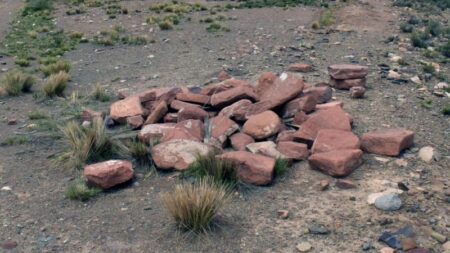
Research published on September 12 in the journal Earth and Planetary Science Letters reveals that during the Ordovician Period, Earth faced a remarkable increase in meteorite impacts. A notable finding from the study is that nearly two dozen impact craters, attributed to this spike, were concentrated within 30 degrees of the equator. These geological formations suggest a possible origin from a surrounding rocky ring around our planet. The lead author, Andrew Tomkins, a geologist and professor at Monash University in Melbourne, Australia, emphasized the statistical improbability of such a spatial arrangement, stating, “It’s statistically unusual that you would get 21 craters all relatively close to the equator. It shouldn’t happen.”
This new theory not only elucidates the escalation in meteorite strikes but also aims to unravel another climatic mystery—the onset of a global deep freeze, ranked amongst the coldest periods in Earth’s climatic history. The scientists posit that the shadow cast by the hypothesized ring could have influenced this extensive cooling event. Tomkins expressed the potential of this inquiry to uncover further secrets within Earth’s past and ponder the evolutionary ramifications of an ancient ring system.
The concept of celestial objects breaking apart upon nearing a planet has been documented, particularly regarding how Saturn’s rings potentially formed from debris dislodged from its icy moons. When an object ventures within what is termed the “Roche limit,” the gravitational forces of the planet can rip it apart, creating rings. Until now, scientists largely entertained the idea that a large asteroid—approximately 7.5 miles (12 kilometers) wide—had fragmented within the solar system to account for the meteorite showers during the Ordovician Period. However, Tomkins points out that such fragmentation would typically result in a random distribution of impact sites, akin to the craters observed on the moon.
The research suggests that a significant asteroid reached Earth’s Roche limit, approximately 9,800 miles (15,800 kilometers) from the planet, potentially explaining the alignment of the 21 known craters coinciding with the equatorial region. The analysis reveals that Earth had about 200 recognized impact strikes through its history, and intriguingly, only 30% of Earth’s surface was suited to preserve such features around the equator. If the strikes had originated randomly, a more dispersed pattern would be expected.
Beyond meteorite impacts, the study leaders reference a prior investigation from February 2022, highlighting signs of an impact spike only observable on Earth and lending credence to the ring theory. Astrophysicist Vincent Eke from Durham University praised the paper’s capacity to tie together various enigmas within planetary science, underscoring its potential to relate impact craters, meteorite debris, and climatic fluctuations.
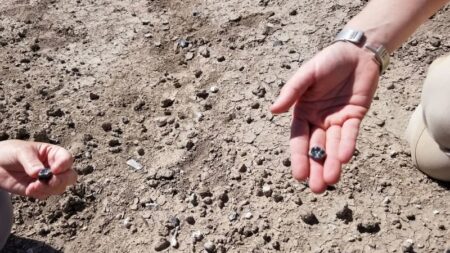
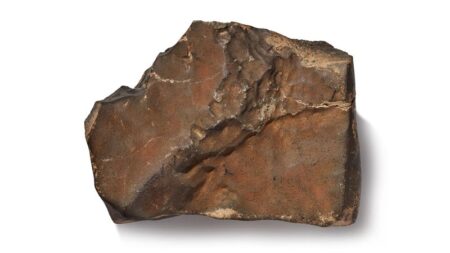
In addition to analyzing the meteorite impacts, the research also uncovers deposits from the era, revealing high levels of L chondrite meteorites—which exhibited signs of reduced exposure to space radiation compared to contemporary meteorites—hinting at a significant breakup of an asteroid near Earth. Following the surge of meteorite strikes, the Hirnantian Age manifested a dramatic global cooling approximately 445 million years ago. Eke emphasizes how the debris from the hypothesized ring could explain the interconnected observations of impact craters, space debris, and shifts in global climate.
An intriguing element within the study is the inquiry into the duration and density of the proposed ring, with Tomkins anticipating future research to unfold how long it persisted and its exact influence on evolutionary processes during challenging climatic conditions. He speculates that even a faint ring would have been noticeable when viewed from Earth, particularly at night when illuminated by sunlight.
Tomkins provides estimates suggesting the possible ring may have existed for about 20 million to 40 million years, with ongoing collisions between particles gradually clearing the system. He notes that while the giant planets currently possess rings, future predictions indicate Mars may develop its own in approximately 100 million years as its inner moon, Phobos, spirals inward and disintegrates.
Meanwhile, the near-Earth asteroid 2024 PT5, often dubbed a “mini-moon,” has been under scientific observation after it approached within 2.8 million miles (4.5 million kilometers) of our planet. While intriguing, the current asteroid could not have formed a new ring around Earth due to its comparatively small size. This phenomenon illustrates processes at play in our cosmic neighborhood that could elucidate how historical ring formations might have occurred, although experts believe such events have been exceedingly rare over the last 500 million years.
Overall, the exploration of Earth’s potential ring system