


In a pivotal legal moment, the Supreme Court of the United Kingdom is set to interpret the definition of a woman in law, a case driven by the efforts of Scottish campaigners. This landmark case originates from a series of disputes that began with specific legislation in the Scottish Parliament. The ruling on this matter holds potential implications for the entire United Kingdom, particularly concerning how the law approaches trans individuals and the intricacies of the gender recognition process.
At the heart of this case lies the ambiguity surrounding the term “sex” in legislation. Current discourse has positioned it against a backdrop of biological definition versus a more contemporary understanding encompassing gender identity and personal self-recognition. The Gender Recognition Act of 2004 established a process for individuals to secure a gender recognition certificate, effectively granting them the legal acknowledgment of their reassigned gender. When obtained, this certificate asserts that if an individual identifies as female, their legal standing is recognized as that of a woman.
The Equality Act of 2010 complements this by enforcing protections against discrimination based on sex and gender reassignment. Notably, within this act, “woman” is simply defined as “a female of any age.” The crux of the legal contention now emerges from how these laws interplay. Does the term “sex,” when referenced in the Equality Act, reflect biological sex or the legally recognized sex derived from a gender recognition certificate provided by the GRA?
The Supreme Court’s deliberations are expected to provide crucial clarity on the matter, particularly how public bodies interpret the law in relation to service provision and safeguards against discrimination. While the Supreme Court’s ruling will not alter the existing laws, its interpretation could create a precedent affecting how services operate within the legal framework defined by the competing lives of biological and gender identity constructs.
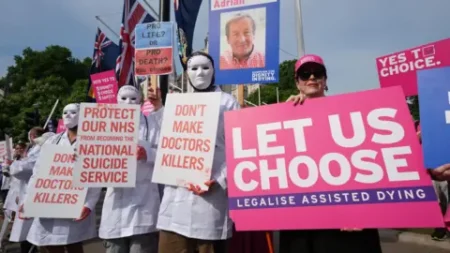
Amidst this legal discussion, tensions have arisen across Scotland regarding the definitions of women and the inclusion of trans individuals. Protests have manifested at the Scottish Parliament as campaigners voice their concerns over the rights of women versus trans people. Complications have emerged particularly around self-identification reforms, which some government members blocked due to possible impacts on the established legal protections.
The journey to the Supreme Court was marked by a legal battle initiated by the campaign group For Women Scotland, challenging the Gender Representation on Public Boards (Scotland) Act, which previously defined women to include those undergoing gender reassignment. The legal interpretation ruled against this definition, considering it conflated two distinct protected characteristics under the Equality Act. In turn, officials from the Scottish Government sought to preserve both definitions by issuing new guidance on the act.
As this case makes its way to the highest court, arguments have emerged emphasizing the biological underpinning of sex versus the inclusive nature championed by the Scottish Government, which conveys the intersection of both legislative acts. The anticipated hearing will engage five judges, leading to a ruling that could reshape policy and raise questions about the future of women-only spaces and services and protections afforded to trans individuals.
The ramifications of this case extend beyond the legal domain; it stirs deep emotional responses and concerns within communities affected, encapsulating the larger societal debates surrounding gender, identity, and protection under the law. Notably, statistics reveal that trans individuals make up a minuscule portion of the population, approximately 0.5%, yet their rights and recognition challenge existing frameworks that seek to protect women.
Potential outcomes from the ruling could resonate through various aspects of life, leading to modified policies in single-sex spaces ranging from support groups for sexual abuse victims to sports. Moreover, it whispers of deeper political ramifications, suggesting a possible legislative overhaul of the Equality Act itself, a call merited by activists and groups who seek clarity while acknowledging, however, the fears of diminishing rights for other protected groups.
In summary, the Supreme Court’s scrutiny of the definition of a woman, as entangled with broader issues of gender rights and equality, may well influence the ongoing dialogue around gender identity and the legal recognition thereof. The outcome could reverberate throughout society, legislating change in equalities that press against the fabric of existing legal frameworks and affecting countless lives. Public interest and scrutiny in this case will likely resonate long after the verdict is announced, highlighting a continuous struggle for clarity and justice in contemporary human rights discourse.