


On the third day of the first Test match between England and New Zealand at the Hagley Oval in Christchurch, England significantly tightened their grip on the game. The performance of bowlers Chris Woakes and Brydon Carse was particularly instrumental as both players claimed three wickets each, effectively reducing the New Zealand side to a precarious position of 155-6. At this stage, New Zealand had only managed a slender lead of four runs, placing them in a challenging position as they looked to build upon their first innings total.
New Zealand’s innings initially appeared solid due to the efforts of Kane Williamson, who skillfully orchestrated a response after the team found itself in trouble at 64-3. His resilience was vital, especially following the early dismissals of key players including Tom Latham, Devon Conway, and Rachin Ravindra. In the process, Williamson crossed the significant milestone of 9,000 Test runs, joining an elite group of cricketers that includes well-known names like Virat Kohli, Steve Smith, and Joe Root. His innings was not just a statistics-based achievement; it was also a pivotal moment for him and the team, showing his capacity to recover from difficult situations.
Tragically for New Zealand, Williamson’s impressive contribution was cut short when he was dismissed for 79 runs, bowled lbw by Woakes at the score of 133-4. His wicket triggered a collapse as Tom Blundell followed shortly thereafter, making a golden duck. The day’s play ended on a low note for the hosts as Glenn Phillips also fell victim to Carse, getting bowled lbw and handing the tourists a psychological advantage.
By stumps, New Zealand was left with Daryl Mitchell and Nathan Smith at the crease, but their task was monumental. Mitchell had shown some fight, managing to score 31 runs, yet the night saw the home side grappling with the specter of defeat looming large over them. It was a day marked by regrets, particularly concerning their fielding performance, as New Zealand fielders dropped no less than eight catches throughout the match. This lack of discipline in the field allowed England to post a formidable first-innings score of 499, which now seemed like an insurmountable target for the hosts.
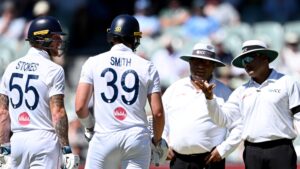
The English side capitalized on New Zealand’s errors ruthlessly. Harry Brook emerged as the star performer with the bat, making a remarkable 171 runs before being caught by Blundell off the bowling of Matt Henry. His innings not only provided England with a solid foundation but also showcased the depth of talent present in the squad. Significant contributions by Ben Stokes and Ollie Pope, who scored 80 and 77 runs respectively, further established England’s dominance in the match. Stokes’ innings, in particular, was noteworthy as it matched his highest score since the arduous 2023 Ashes series, reflecting an upturn in his form.
Additionally, England’s tail-enders, including Gus Atkinson and Brydon Carse, added valuable runs, accumulating 81 runs between them. This supplementary scoring from lower-order batsmen not only bolstered England’s total but also underlined their determination and ability to build an innings despite challenges. As the match proceeded, England’s bowlers were keenly aware that while they had worked hard to reduce New Zealand’s score, they still needed to navigate the tail to claim victory emphatically.
Given the events so far, England appeared poised to take a lead in the series, expected to capitalize on New Zealand’s fielding failures and bowl them out as they sought to put the match beyond doubt. Fans and analysts alike were eager to tune in and follow the unfolding drama of the New Zealand versus England Test, which is available for live viewing in the UK on TNT Sports and discovery+. It was shaping up to be not just a contest for the current match but a significant chapter in this ongoing cricketing rivalry.