



On a recent Monday, leading Republican senators exhibited clear support for Donald Trump’s decision to replace the current FBI director, Christopher Wray, with his loyal ally Kash Patel. This move comes in the wake of Trump’s plans for his future administration, which include considering Pete Hegseth for the role of Secretary of Defense. However, it’s important to note that Hegseth faces allegations related to misconduct, which have raised some concerns among lawmakers.
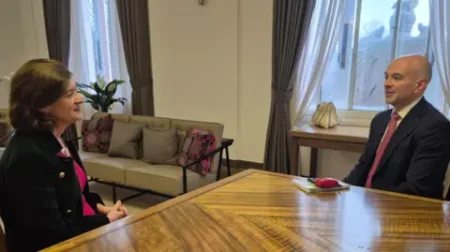
Senator Joni Ernst, a member of the Armed Services Committee and considered a pivotal swing vote, expressed optimism following a meeting with Hegseth. She described their discussions as “encouraging” and noted his commitment to conducting a thorough audit of the Pentagon. Ernst emphasized that Hegseth aims to appoint a senior official focused on the value and roles of servicemen and women based on merit rather than quotas. Further, she indicated that Hegseth would prioritize initiatives aimed at preventing sexual assault within the military ranks.
Despite these positive sentiments, Hegseth’s path to nomination is not without obstacles, particularly given a 2017 sexual assault allegation that caused uncertainty about his candidacy. Saudi Arabia and a contingent of Trump allies in Congress have voiced apprehensions regarding the seriousness of these allegations. Nevertheless, Trump remains a staunch supporter of Hegseth, making any opposition to his nomination a delicate issue for GOP senators grappling with the evolving landscape of Trump’s upcoming Cabinet choices. While confirmation votes for these nominees are expected next year, there is a cautious atmosphere where senators proceed carefully in aligning with the president-elect’s choices.
Amid the allegations, Hegseth has rebutted the claims against him, labeling them as unwarranted attacks. He described his engagement with Ernst during their recent conversation as positive. However, when pressed by reporters about her confidence in Hegseth’s denials regarding the allegations, Ernst declined to specify, noting it was a matter still under consideration.
Ernst also addressed Hegseth’s perspectives on the role of women in the military, asserting that he is supportive of their positions in the armed forces, despite prior comments he made suggesting that women should not participate in combat. Meanwhile, Senate Republicans appear to be coalescing around Trump’s choice of Kash Patel as the new FBI director, highlighting a shift in the party’s disposition toward Trump’s appointments.
Appointing Patel would require a significant shake-up within the FBI, including the removal of Wray before his term concludes. A vocal opponent of what he perceives as the “deep state,” Patel’s leadership could intensify partisan divisions within the agency. Senator John Cornyn of Texas has expressed a willingness to back Patel’s nomination, adding that Ernst believes it would bring much-needed transparency to the FBI’s operations.
Senator Chuck Grassley of Iowa, who will take over as chairman of the Senate Judiciary Committee, has voiced profound dissatisfaction with Wray’s management of the FBI. In correspondence directed to Wray, he expressed a lack of confidence in the current leadership, reinforcing a pivotal shift within the party.
Grassley stated that Patel shares his concerns about the FBI’s direction and emphasized Patel’s commitment to ensuring effective congressional oversight. Cornyn anticipates Patel’s confirmation, stressing the necessity of restoring the FBI’s reputation as an apolitical investigative body, while keeping his personal views on Wray’s future vague.
Pertinent to Patel’s controversial background, his previous remarks have ruffled feathers, prompting Cornyn to describe such comments as hyperbolic. Patel himself had previously suggested that the FBI’s headquarters should be transformed into a “museum of the deep state,” a description that encapsulates his confrontational stance against established political structures.
In his recent publication, “Government Gangsters: The Deep State, the Truth, and the Battle for Our Democracy,” Patel criticizes partisan factions for allegedly undermining the law enforcement establishment against Trump. This narrative continues to evolve amid ongoing discussions and developments surrounding Trump’s transition into the presidency and the imperative shaping of his administration.
The complexities of these appointments, the tug-of-war for support among GOP senators, and the underlying investigations and allegations form a crucial backdrop as Trump approaches his transition period. This situation remains dynamic, with further updates expected as the political landscape shifts in the wake of Trump’s anticipated Cabinet selections.