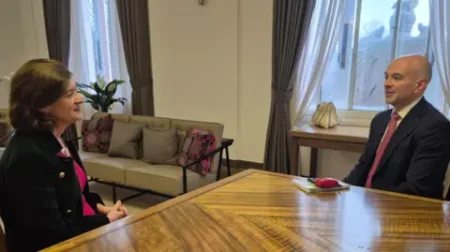




The UK Treasury has recently issued a stark warning to government ministers regarding non-essential spending. Chancellor Rachel Reeves has made it clear that there’s a need to adopt a stringent approach to public finance management, emphasizing that expenditures which do not directly align with government priorities must be halted. The Chancellor’s resolve to combat wasteful spending has been characterized by a commitment to an “iron fist” approach. As the country prepares for a detailed spending review set to extend through 2029, Reeves is urging departmental heads to pinpoint efficiency savings amounting to 5% of their existing budgets.
Additionally, the review process will involve rigorous scrutiny of these departmental budgets by specialized panels. These panels will consist of seasoned finance professionals, including former top executives from well-established banks, tasked with evaluating spending and determining what items are genuinely necessary. This initiative is part of a broader strategy to ensure that government resources are allocated efficiently, facilitating the government’s wider goals.
Critics from the Conservative Party have reacted with skepticism to Reeves’ plans. They argue that she either lacks control over her departments or is unaware of how to reconcile Labour’s economic proposals without resorting to increased taxes or borrowing. Richard Fuller, the Shadow Treasury minister, voiced these concerns, emphasizing that, despite the positive intention behind seeking value for taxpayer money, Reeves’ track record has been marred by inadequate reforms in public sector productivity.
Concerns are also rising regarding potential sacrifices in essential services, particularly in social care. Daisy Cooper, the Treasury spokesperson for the Liberal Democrats, has cautioned the government against making cuts in this vital sector, calling it a “false economy.” Cooper highlighted that proper investment in social care could lead to significant savings within the National Health Service (NHS) budget. This dialogue underscores the contentious nature of government spending reviews in times of economic uncertainty.
Reeves has articulated a clear vision for the spending review: the Treasury has announced that “departments will be instructed to cease spending that does not contribute to priority areas.” The Chancellor has reassured the public that every pound spent will undergo meticulous line-by-line scrutiny to guarantee it serves governmental aims and delivers value for the taxpayer. This intense focus on efficiency comes in the wake of Prime Minister Keir Starmer’s recent articulation of his “Plan for Change,” which outlines ambitious targets, including making significant improvements in NHS waiting times and stimulating economic growth through increased housing development.
The Treasury’s commitment to reviewing departmental budgets is set to be comprehensive. Panels comprised of experts from financial institutions, think tanks, and academic backgrounds will offer an independent perspective on the necessity of various government expenditures, ensuring a well-rounded approach to budgetary accuracy. The Chancellor has identified past spending habits, particularly those she deems wasteful under the previous government, as a catalyst for her newly stringent policies. For instance, Reeves pointed to a specific initiative that aimed to integrate social workers into schools, which had wasted £6.5 million without yielding any measurable positive outcomes for social care.
In her previous October budget, Reeves had proposed £40 billion in tax increases, primarily impacting businesses, with the stated intention of addressing a £22 billion deficit left by the Conservative government’s financial decisions. However, she has since reassured constituents that further tax increases to ensure public spending stability are unnecessary.
Prime Minister Starmer, while discussing the economic outlook, indicated the government’s resolve to manage finances prudently without persistent reliance on additional funding requests, which presents a balancing act amid unforeseen circumstances that could influence the economic landscape, reminiscent of challenges presented by events like the pandemic or geopolitical tensions. This nuanced conversation around public expenditure reflects a British government grappling with the ongoing repercussions of financial management and the priorities of a recovering economy.