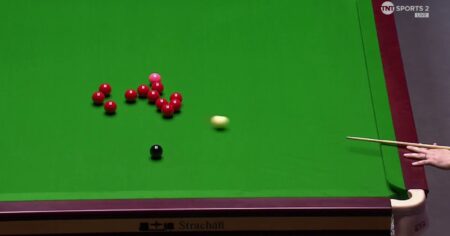




In a remarkable turn of events at the BetVictor Scottish Open, snooker player Jack Lisowski made headlines for an extraordinary concession of his match against opponent Mark Allen. The match, which was filled with tension and skill, took a bizarre twist when Lisowski decided to concede rather than continue playing. Describing the moment in a post-match interview, he simply stated, “That is the end of that,” effectively summing up the surprising end to the match.
The Scottish Open, a key event in the snooker calendar, witnessed this unusual occurrence as Lisowski and Allen engaged in what had been a competitive battle. Both players are well-regarded in the snooker community; Allen known for his strategic prowess and Lisowski for his impressive break-building skills. However, the dynamics of the game changed significantly, leading to Lisowski’s unexpected decision.
Leading up to the concession, the match had seen Lisowski struggle with his form, battling both Allen’s tactical gameplay and his own inconsistencies. Despite having the capacity to display spectacular shots, Lisowski faced challenges that affected his momentum, leading to a dip in confidence. The match seemed to pivot when a sequence of missed opportunities for Lisowski culminated in his decision to forfeit. His concession stirred various reactions from fans and commentators, many of whom were taken aback by such a decision in a competitive tournament.
For snooker enthusiasts, conceding a match is far from common and is usually reserved for instances where a player feels physically unable to continue or when they no longer see a feasible opportunity for victory. Lisowski’s statement, “That is the end of that,” reflects a sense of resignation and frustration at the turn of events, which left spectators perplexed about his mindset during the match.
Post-match discussions centered around what may have contributed to Lisowski’s choice to concede. Factors such as mental fatigue, previous performance pressure, or perhaps even a strategic assessment of the chances left to compete against Allen were analyzed by pundits. Allen, on his part, acknowledged the concession with sportsmanship, emphasizing the complexity of competitive snooker and the mental challenges inherent in high-pressure matches.
The BetVictor Scottish Open continues to draw significant attention from snooker fans, not just for the caliber of play but also for the dramatic narratives that unfold during its matches. Lisowski and Allen’s encounter now adds to the folklore of the event, showcasing the unpredictable nature of sports where a turn of events can change the outcome entirely based on human elements like pressure and psychological resilience.
Furthermore, Lisowski’s concession raises questions about the mental fortitude required in snooker at high levels. It underscores the importance of maintaining focus and composure throughout a match, as the psychological aspect can often be just as crucial as technical skill. The reaction to Lisowski’s concession will likely prompt discussions about mental health and the pressures faced by professional athletes in such high-stakes environments.
In summary, Jack Lisowski’s unusual concession to Mark Allen at the BetVictor Scottish Open has sparked conversations across the snooker community regarding the emotional and mental challenges players face. While Allen continues in the tournament, Lisowski’s decision serves as a reminder of the unpredictability of competitive sports and the human factors that play into each player’s performance, contributing to the rich narrative of the sport.