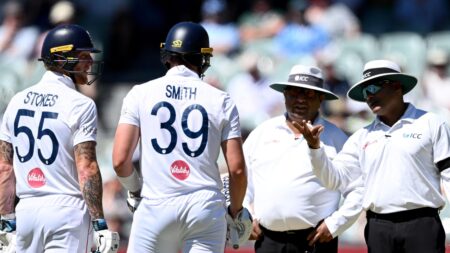




In a disheartening display, the English cricket team faced a crushing defeat at the hands of New Zealand during the second day of the third Test in Hamilton. England’s hopes for a clean sweep in New Zealand were dashed as they succumbed to a meager total of 143 runs, losing their last eight wickets for a mere 66 runs. This performance has been heralded as yet another chapter in a troubling trend of collapses for the team, particularly in crucial series finales.
The match started relatively positively for England, bolstered by the performance of Ben Stokes and Ollie Pope, who put together a brief 52-run partnership. However, as they finished the innings, tragedy struck, leading to the catastrophic dismissal of five players for just nine runs. It was indeed a harsh reality check following a promising beginning. Matt Henry’s bowling excellence was pivotal, taking 4 wickets for 48 runs. Yet, it was the astounding efforts of Will O’Rourke, who claimed three wickets in the span of just eight balls, that truly decimated England’s batting line.
New Zealand, who earlier posted a first innings total of 347 runs, had already established a robust lead. Despite the morning session being devoid of much turbulence, the evening saw England’s bowlers toil in the field again, as New Zealand resumed their innings with significant momentum. Will Young scored a competent 60 runs while Kane Williamson remained unbeaten at 50, pushing New Zealand’s total to 136-3 by the close of play. Their lead swelled to an alarming 340 runs, leaving England facing an uphill battle to salvage the match.
Despite these challenges, England managed to chalk up victories in earlier matches of the series—victories that had initially raised spirits among fans. However, the pattern of ending poorly after a promising start in series campaigns has become a familiar lament. England finds itself in a position reminiscent of previous series against formidable foes like India and Pakistan. The inability to maintain performance consistency throughout a series crunches aspirations and undermines earlier accomplishments.
In modern cricket, collapses such as the one witnessed by England are difficult to digest. Key players, including the captain Stokes and mighty opener Zak Crawley, went down against a relentless Kiwi attack, remarkably often before the crease could gain any solid footing. A poignant moment came when Joe Root, who seemed in reasonable touch, succumbed to a wild flourish rather than consolidating. The aggressive patterns of play often lead to rapid downfalls—a narrative that echo the valiant endeavors but somber outcomes.
The leadership decisions throughout the match have also been scrutinized. The England side appeared to be tentative against Santner and O’Rourke, allowing them to take control. Although they came into a position of bowling under a newly acquired ball, England managed to let Santner and O’Rourke garner crucial runs that dramatically altered the match momentum. The strategic errors on their part laid the groundwork for New Zealand’s subsequent dominance.
The grim narrative of England’s batting woes was echoed in the hard-hitting performances of both Santner and O’Rourke, who shaped New Zealand’s innings not just through runs but also by demoralizing the English side. As the series unfolds, it is clear that England has significant introspection to undertake if they are to break free from these patterns of inadequacy. To emerge from this series with credit, a solid reassessment of tactics, mentality, and execution in batting is now necessitated. If not, further struggles await as they seek to contend with the international cricketing landscape.