



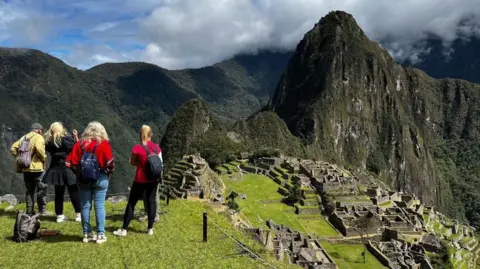
Machu Picchu, the iconic Inca citadel nestled high in the Andes of Peru, has become embroiled in a contentious situation regarding its tourist transportation. Known for attracting over 1.6 million visitors annually, this UNESCO World Heritage site is facing severe disruptions primarily due to conflicts surrounding the bus services that shuttle tourists from the nearby town of Aguas Calientes to the historical site. The growing tensions among local transport companies have recently culminated in an incident where approximately 1,400 tourists found themselves stranded, necessitating rescue operations.
At the forefront of this ongoing dispute is Cristian Alberto Caballero Chacón, the operations manager for Consettur, a bus company that has operated in the region for over three decades. Consettur plays a vital role in transporting around 4,500 tourists daily to Machu Picchu. The bus journey lasts merely 20 minutes, offering the sole alternative to what would be a demanding two-hour hike for those wishing to avoid the bus service. Caballero acknowledges that recent months have been marked by tensions among various community members, particularly following the loss of Consettur’s operating license to a competitor in this remote location.
The transportation route to Machu Picchu requires tourists to first take a train to Aguas Calientes, which can take between two to three and a half hours. Following that, the bus journey is essential for reaching the ancient site itself, making the role of Consettur and similar services crucial. The conflict has escalated to the point where protestors blocked train access to Aguas Calientes in September, expressing their frustrations about what they viewed as an inadequate bidding process that favored a new operator, San Antonio de Torontoy.
Despite the controversy, local residents are divided in their opinions; there is a sentiment among some that Consettur effectively held a monopoly on the lucrative services. A regular round-trip bus fare sits at $24 for international tourists and $15 for Peruvians. Consettur’s operating license expired in September, yet it has continued services amidst legal disputes delaying the establishment of San Antonio de Torontoy.
Caballero insists that Consettur does not hold a monopoly, emphasizing that it comprises twelve different companies with diverse local partnerships, including considerable investment by the local district council, which owns a substantial share of Consettur. Meanwhile, locals’ aspirations for equitable access to the transportation revenues remain a contentious issue.
In addition to local transport disputes, tourists have raised concerns about the overall costs of visiting Machu Picchu. For instance, Australian traveller Annalise Jaksic lamented the exorbitant ticket prices for train services, which can reach as high as $2,000 for luxury options. Many tourists often anticipate a seamless experience but are astonished by the myriad logistical hurdles posed by the fragmented transport systems and ticket acquisitions.
Further complicating matters, the mayor of Aguas Calientes, Elvis La Torre, has voiced his frustrations regarding tourism revenues. He claims that a mere 10% of ticket sales remains in the local region, with the bulk directed to the national government, a situation he argues necessitates change. The call for increased local funding aims to enhance tourism facilities and address essential services that the community currently lacks, such as healthcare and educational infrastructure.
The underlying aspirations for improving local conditions are echoed by various stakeholders, including Carlos González, president of the regional chamber of tourism. González envisions a more integrated approach to tourism management and services in Peru, one that would elevate the country’s standing in the global tourism market while also touching on the multifaceted needs of contemporary tourists.
Despite the current disputes, there is the potential for reconciliation among rival bus operators, as Caballero has expressed a willingness to cooperate with San Antonio de Torontoy should they receive the requisite approvals. His hopeful outlook stands in contrast to the larger backdrop of political instability in Peru, which hampers efforts to implement substantive changes in the tourism sector.
As Machu Picchu continues to captivate the world, its accessibility and the controversies surrounding transport underscore the broader implications of tourism management in regions rich in heritage but facing complex socio-economic challenges.