


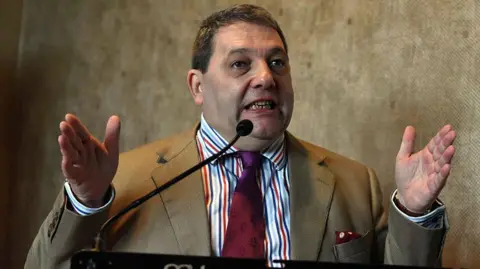
In a recent development, David Coburn, a former Member of the European Parliament (MEP) for the Brexit Party and the UK Independence Party (UKIP), has publicly denied accusations that he received payments as part of a pro-Russian influence campaign during his time in the European Parliament. This denial comes in light of WhatsApp conversations that have surfaced involving Nathan Gill, a disgraced former MEP, who has been convicted of bribery tied to pro-Russian activities and sentenced to ten and a half years in jail.
The controversy surrounding Coburn stems from being named in correspondence linked to an alleged “pawn” of Russia’s security agency and chats about financial transactions related to Gill. Coburn held a significant political position when he served as the leader of UKIP in Scotland, alongside Gill, who led the party in Wales. Together, they were MEPs during the same term and are now embroiled in a scandal that questions the integrity of their political engagements.
The WhatsApp messages were disclosed following the sentencing of Gill, who had admitted to taking bribes for providing interviews and speeches that favored the Russian narrative. Notably, one message suggested a payment of approximately $6,500 for another MEP, with further discussions hinting that additional funds had been allocated for Coburn. In response to these allegations, Coburn has categorically denied ever receiving money for supporting pro-Russian agendas and stated explicitly that he had no engagement in such activities.
When approached by BBC reporters outside his home in France, Coburn firmly replied “no” to claims of having received compensation to promote pro-Russian sentiments. The BBC has stated that it did not yield evidence substantiating that Coburn directly accepted any payments, although the documents associated with Gill’s sentencing brought attention to communications that implicated Coburn’s name.
These messages were reportedly pinpointed during a police investigation initiated after Gill was detained at Manchester airport prior to attending a conference in Moscow. They referenced payments made to Gill intended for distribution between respective parties, including an “other MEP” mentioned only as “D” or “David”—widely interpreted to refer to Coburn.
Adding to the gravity of the situation, it has been recorded that Coburn was the only individual named “David” who had publicly engaged with pro-Russian broadcasters. In a European Parliament debate, Coburn’s remarks echoed sentiments regarding media closures in Ukraine, possibly drawing scrutiny towards his political alignment and existing relationships with controversial figures in the pro-Kremlin sphere.
Moreover, the investigation extends beyond Coburn and Gill, as it has drawn in discussions about the influence of Russian operatives on British politics. Oleg Voloshyn, identified as a co-defendant in the bribery case against Gill, remains out of reach for UK authorities as he is not present in the country; he has claimed that he has not been contacted by police. The intricate network of communication amongst these individuals and the implications surrounding payments raises questions regarding the integrity of political discourse and actions taken in the context of foreign influence.
The repercussions of this case are broad, prompting calls from prominent figures, such as Prime Minister Keir Starmer, for investigations into potential ties between the Reform UK party and Russian interests. Farage, the leader of Reform UK and formerly of UKIP, expressed confidence that no other party members were involved in similar activities, though he acknowledged a need for broader investigations into foreign interference.
As the investigations into these unsettling allegations continue, the political landscape is rife with challenges in maintaining transparency and securing trust in elected representatives. The case of Coburn and Gill illustrates the potential for corruption at high levels, urging vigilance against foreign influence in domestic politics. The ongoing inquiry remains critical in uncovering any existing links to Russia and ensuring accountability within the political framework.