

In a turbulent landscape dominated by geopolitical tensions and corporate maneuvers, TikTok finds itself amid a prolonged saga involving its ownership, centered primarily on the fears surrounding data privacy and national security. A billionaire investor, keen on purchasing the U.S. operations of TikTok, has expressed his frustration as the deadline set for a compulsory sale by its parent company, ByteDance, continues to be postponed. With the latest extension looming, this uncertainty leaves investors like Frank McCourt in a precarious waiting game regarding the platform’s fate.
From concerns about ByteDance’s connections to the Chinese government, which legislators argue pose significant risks to U.S. national security, the political motivations behind this ongoing sale saga have been palpably intense. In 2024, a law was enacted mandating either the sale or shutdown of TikTok in the U.S., a move that highlighted fears over potential data harvesting of American users. Despite these assertions, TikTok and its owners have consistently denied these allegations, deeming them as unfounded. Under President Joe Biden’s administration, further legislative backing came through the Supreme Court, which upheld the constitutional basis of the law, further weaving a complex tapestry of regulatory challenges.
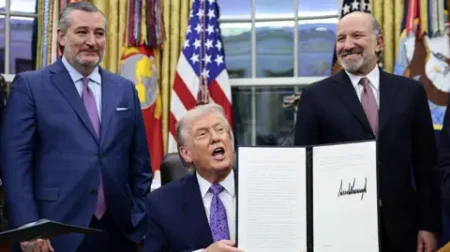
According to McCourt, the current political environment influenced by the previous administration adds to the turmoil. Former President Donald Trump’s inclination to authorize a sale backed by influential figures in the tech industry raises eyebrows, leading to speculation about the extent of political and business alliances shaping the direction of the deal. In previous scenarios, Trump asserted that discussions for a sale had been favorable, involving key personalities like Larry Ellison of Oracle and Michael Dell of Dell Technologies. However, no concrete agreements have been finalized, leaving many analysts skeptical about the likelihood of an imminent sale, as ongoing negotiations loom without much concrete progress.
More recently, Trump has reiterated intentions suggesting that a deal had already been sanctioned, yet neither ByteDance nor officials from Beijing have formally acknowledged such transactions, further obfuscating the situation. McCourt and his consortium, which includes significant figures such as Reddit co-founder Alexis Ohanian and investor Kevin O’Leary, have emphasized concerns over a concentration of control and influence in a landscape shaped by social media platforms, signaling their awareness of the parameters in which such a sale must navigate. Their hope is to see TikTok either being sold or dismantled in a manner that prioritizes compliance with U.S. laws, reinforcing the necessity for accountability in digital platforms.
McCourt has voiced his desire for a TikTok functioning entirely devoid of its Chinese origins, notably the controversial recommendation algorithms that have become central to its user engagement strategy. He elaborated that within his initiative, dubbed Project Liberty, alternatives are being developed that could replace the current technological frameworks facilitating TikTok’s operations in America.
Ultimately, the fate of TikTok is shrouded in an uncertain political atmosphere where investors, officials, and users alike are left speculating the next moves. As discussions continue and deadlines now seemingly stretch indefinitely, the challenge remains for stakeholders not just to navigate the labyrinth of agreements and approvals but also to contend with geopolitical pressures that frame the discourse around data, national security, and technological sovereignty.
In conclusion, what remains clear is that TikTok is embroiled in a landscape where business and politics intersect, with heightened scrutiny on its ownership and operational integrity. Each delay in decision-making only serves to intensify the limbo for investors and users, underscoring the complexity of a deal intertwined with national interests and corporate ambitions. As McCourt prepares to act when the opportunity arises, the question remains: how will this prolonged tension ultimately resolve?