

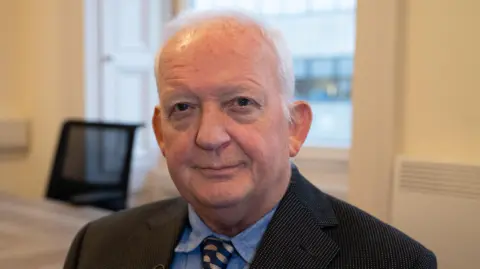
In a significant political upheaval, Reform UK has achieved a historic milestone by winning its first council by-election in Scotland, marking a notable shift in the local electoral landscape. This victory comes as David McLennan, representing the party, was elected as a councillor for Whitburn and Blackburn in West Lothian, a seat previously held by the Scottish Labour party. His election has stirred political discussions given the backdrop of increasing dissatisfaction among voters with traditional political parties.
David McLennan garnered a total of 1,177 votes, surpassing his closest competitor, a Scottish National Party (SNP) candidate, by a margin of 149 votes. This victory is perceived as a clear indication that the Reform party is beginning to resonate with an electorate keen on exploring alternatives to the established parties. Such sentiments are echoed by polling data suggesting a significant rise in Reform UK’s support within Scotland, positioning them potentially as a competitor for the second spot behind the SNP in the upcoming Scottish parliamentary elections.
Interestingly, McLennan’s triumph in the by-election does not stand in isolation. Over the past months, the Reform party has observed several important defections from other political factions, most notably from the Scottish Conservative Party, with figures like MSP Graham Simpson and financial supporters such as Lord Malcolm Offord joining the ranks of Reform UK. In fact, the recent election marked McLennan as the party’s first-ever elected official in Scotland under the party’s banner, a landmark achievement that underscores the shifting political alliances in the region.
Reform UK’s leader, Nigel Farage, expressed his elation over the victory, noting it as an unexpected triumph in a constituency not initially anticipated to swing toward their party. McLennan himself expressed gratitude to the constituents for their trust, pointing out that this victory serves as a clear signal that the local community desires progressive changes and new directions in its governance. He termed this event a “vote of faith” in the Reform ideology, asserting that this aligns with a growing momentum for the party within Scottish politics.
However, the political environment remains charged with challenges. The SNP is keen to assert that their campaign has been squarely focused on addressing the genuine issues confronting local communities. A spokesperson highlighted that the outcome of the by-election illustrates a decline in Labour’s voter base and emphasized SNP’s role as essential in countering the rise of Reform UK’s presence. Similarly, Scottish Labour Deputy Leader Jackie Baillie underscored the significance of the results, noting a collective disenchantment with politics and a vital need for change.
The political discourse has been further inflamed by controversies surrounding defections, particularly with Lord Offord’s switch from the Scottish Conservatives to Reform, leading to heated confrontations in public platforms. During a BBC Question Time episode, exchanges between Offord and Scottish Conservative leader Russell Findlay were marked by tension, reflecting the broader fractures within the traditional political spectrum in Scotland.
As Reform UK rallies support ahead of the May elections for the Scottish Parliament, there is speculation surrounding its prospects. The latest opinion polls suggest that the party is not only growing in followers but could potentially disrupt the established political balance, complicating the paths of the main parties as they strategize in response. Their approach so far has largely capitalized on discontent with traditional governance, but party insiders acknowledge that addressing substantive economic issues will be essential to sustain and grow their base.
While the political narrative surrounding Reform UK may be characterized by its hardline stance on issues such as immigration, it is evident that the party intends to broaden its policy scope to include economic recovery and employment. As the electorate becomes increasingly fatigued with conventional political rhetoric, Reform UK’s ascent poses a unique challenge to the status quo, requiring established parties to rethink their strategies as they confront this new wave of political rivalry in Scotland.