



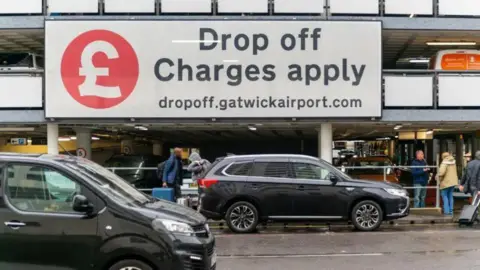
Gatwick Airport, one of the major airports in the United Kingdom, has recently announced an increase in its drop-off charge, raising it from £7 to a staggering £10. This adjustment in the pricing structure will take effect on 6 January, making it remarkably costly for drivers to stop briefly outside the terminal to drop off family and friends.
The decision to raise the drop-off fee by £3 has drawn criticism and concern, as it represents a significant increase not only in the fee itself but also in how travelers will perceive the airport’s accessibility. A spokesperson from Gatwick Airport stated that the increase was made after careful consideration and is attributed to a rise in operational costs, including a drastic hike in business rates—more than doubling in recent times. These costs bear down on facilities that serve passengers and, naturally, influence the pricing strategies airports must adopt.
Rod Dennis, a senior policy officer at the RAC, pointed out the discontent this change is likely to cause among motorists. Expressing his sentiments, he remarked that such a substantial uptick—over 40 percent from the previously set charge—will likely lead to frustrating experiences for those who intend to drop off loved ones, especially with New Year’s festivities just around the corner. Dennis noted that the current rate increases were unprecedented, marking the drop-off fee’s second significant rise since its introduction in March 2021.
Moreover, comparing Gatwick’s fees with those of other airports reveals a trend that many might find discomforting. Southend Airport, for example, allows for a drop-off of up to five minutes at a charge of £7, with the fee escalating to £15 for up to thirty minutes. Gatwick’s pricing has been on a steady increase, starting at just £5 in 2021, then rising to £6 in 2022 and again to £7 by May 2023. This continued escalation has caused these costs to spiral, sparking debates over equity and the justification of such fees.
In response to the backlash, Gatwick reiterated that the increased charges are meant to redirect travelers toward greener transportation options such as public transit, helping to limit the number of vehicles around the airport and lessen congestion at terminal entrances. The airport spokesperson did acknowledge that passengers can avoid drop-off fees by utilizing long-stay parking facilities and catching a complimentary shuttle bus to the terminals. Additionally, it’s worth noting that holders of Blue Badges, which are issued to those with disabilities, will not be subject to these drop-off charges.
On a broader scale, the federal government offers support packages aimed at alleviating financial burdens related to business rates, especially for properties such as airports. They indicated that while airports have the autonomy to set their parking terms, they must also adhere to consumer laws and substantiate their charges. Highlighting the alarming fact that without government intervention, rates could skyrocket by up to 500%.
This increase in drop-off charges is not unique to Gatwick. Heathrow Airport is also set to raise its drop-off fee from £6 to £7 starting on 1 January, while London City Airport, which currently does not impose a drop-off fee, is expected to introduce one later this month. In stark contrast, a recent study by the RAC demonstrated that out of the ten largest airports in mainland Europe, only Schiphol Airport in Amsterdam has implemented a similar drop-off fee.
As travelers and families brace for the announcement and subsequent fee hikes, it raises many questions about the accessibility and practicality of air travel in the present economic climate. The issue will likely continue to develop as passengers express their feelings about these financial changes at a time when travel is recovering amid global fluctuations in airline operations and economic stability.