


Recently, the Spanish government levied a substantial fine of €64 million (around £56 million) against Airbnb, a leading entity in the short-term property rental market. This penalty was primarily due to Airbnb’s advertisement of unlicensed apartments across various regions, including some of the most visited spots in Spain. The unauthorised nature of these rentals has illicitly allowed a number of properties to be marketed for tourist accommodation, raising alarm among local authorities and communities regarding the impact on the housing market.
In light of this significant fine, Airbnb is currently required to retract all advertising related to the unlicensed properties in question. The Consumer Affairs Ministry of Spain has clearly stated that this penalty cannot be appealed, underscoring the seriousness of the violation. However, Airbnb has announced its intentions to dispute the fine in court, which indicates an ongoing legal battle over the regulatory landscape of short-term rentals in the country.
Spain is among the world’s leading tourist destinations, boasting a vibrant tourism economy. Nonetheless, this popularity contributes to a crisis of affordable housing, as soaring demand from inbound visitors inflates property prices and increasingly pushes local citizens out of the housing market. High demand for rental properties from tourists contrasts sharply with the needs of local residents seeking affordable accommodations.
Pablo Bustinduy, Spain’s Consumer Rights Minister, highlighted the injustice faced by many local families, stating, “There are thousands of families who are living on the edge due to housing, while a few get rich with business models that expel people from their homes.” His statements reflect a broader concern regarding the societal impacts of short-term rentals and their contribution to homelessness and poverty among locals.
In contrast, Airbnb maintains that the actions taken by the Ministry of Consumer Affairs violate existing regulations in Spain. A spokesperson for the company argued that they have been cooperating with the Ministry of Housing, especially since significant regulatory changes related to short-term rentals were enacted in July. They assert that they are committed to supporting the enforcement of new rules which aim to streamline the registration system for rental properties while ensuring compliance with local regulations.
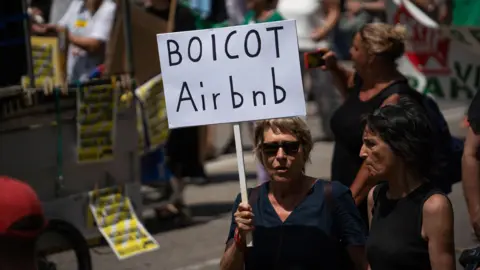
Across various international hotspots, similar concerns regarding short-term rental firms like Airbnb have echoed. Local governments view the influx of tourists and the transient nature of short-term tenants as factors that disrupt neighborhood dynamics. Cities such as Barcelona, New York, Berlin, Paris, and San Francisco have implemented strict limitations on the operations of Airbnb and similar services to mitigate disturbances caused by tourist-centered accommodations.
Airbnb itself rose to prominence after its inception in 2007 and truly gained traction around 2014, largely driven by a demand for alternative and affordable accommodation options devoid of hotel taxes. The platform’s model allowed virtually anyone to become a host, enabling individuals to earn extra income by renting out spare rooms. However, this growth has not been without significant backlash, which includes complaints about noise disturbances and challenges in holding hosts accountable for negative behaviors that rental guests may exhibit.
The Spanish government disclosed that approximately 65,122 Airbnb listings were found in violation of consumer regulations. These violations encompassed properties that were either unlicensed or had incorrect license numbers associated with their listings. Bustinduy reiterated on the social media platform Bluesky that no entity, regardless of its stature or influence, operates above the law, especially in matters impacting housing.
As a result, the tensions between short-term rental companies and local regulators are likely to continue. The delicate balance between tourism and the rights of residents remains a central issue as cities press forward with regulations aimed at ensuring some measure of stability and affordability in the housing sector, all while navigating the complexities introduced by the demands of a global tourism economy.