

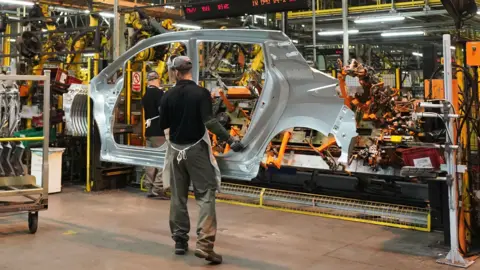
In a remarkable development for the automotive sector in the United Kingdom, Nissan has officially commenced the production of its new electric vehicle, the Leaf, at its factory in Sunderland. This facility holds the distinction of being the UK’s largest car manufacturing site and has a workforce of around 6,000 employees. The commencement of production marks significant progress, signifying the first arrival of a new high-volume vehicle in the UK since 2020.
Nissan’s investment in the Sunderland facility exceeds £450 million, underscoring the company’s commitment to advancing its operations in the UK. Business and Trade Secretary Peter Kyle has praised Sunderland as the “beating heart of the UK’s automotive industry,” emphasizing the importance of this financial commitment to the North East region. This initiative not only strengthens the local economy but also reinforces the UK’s position in the competitive electric vehicle market.
The third-generation Leaf was first introduced in the UK in 2011, and it has quickly become a flagship for Nissan’s electric vehicle lineup. The latest iteration is poised to feature an impressive range, capable of traveling up to 375 miles (approximately 604 kilometers) on a single charge. Consumers will benefit from a financial incentive as the Leaf is eligible for the government’s electric car grant, providing a £3,750 discount on the price of the vehicle.
Images showcasing the sleek design of the new Leaf highlight its modern aesthetic and innovative features. The manufacturing of the Leaf at Sunderland will also see the integration of locally produced batteries, further contributing to the regional supply chain and bolstering local job opportunities. Adam Pennick, the Vice President of manufacturing at Nissan Sunderland, expressed immense pride and enthusiasm among the team for being part of this significant project.
Notably, Kim McGuinness, the North East Mayor, highlighted that the automotive sector in the area would receive an additional £50 million in funding from the government, further supporting regional growth and development. The initiation of production for the new Leaf has been characterized as a “landmark day for our car industry,” symbolizing renewed hope and vitality for local manufacturing in this evolving sector.
Despite the jubilations surrounding Nissan’s new venture, political discussions remain contentious. Conservative leader Kemi Badenoch has announced an intention to reverse the party’s plan to prohibit the sale of new petrol and diesel vehicles by 2030 if they are successful in the upcoming elections. Writing in the Sunday Telegraph, she framed quotas for electric vehicles as “economic self-harm,” aligning her stance with recent lobbying efforts from European nations seeking to adjust timelines for phasing out traditional combustion engine vehicles.
The landscape of the automotive industry in the UK faces many challenges, especially with the increasing importance of electric vehicles amid climate change initiatives and evolving consumer preferences. The new Leaf is emblematic of the shifts occurring within the industry, as companies like Nissan pivot towards more sustainable options. As the production of the Leaf unfolds in Sunderland, the eyes of the automotive world will remain focused on the UK as it navigates the transition towards a greener future.
In light of these developments, stakeholders including industry experts, local government officials, and the workforce in Sunderland will be looking on with great interest. The potential for driving growth within the electric vehicle sector alongside providing employment opportunities to thousands is a clear highlight of this new chapter for Nissan and the UK automotive industry overall. Following the excitement surrounding the new Leaf, Nissan’s ongoing commitment to innovation and sustainability will undoubtedly shape the future landscape of car manufacturing in the region. Fans and followers of Nissan are encouraged to stay up-to-date with developments via various media channels like BBC Sunderland and social media platforms.