

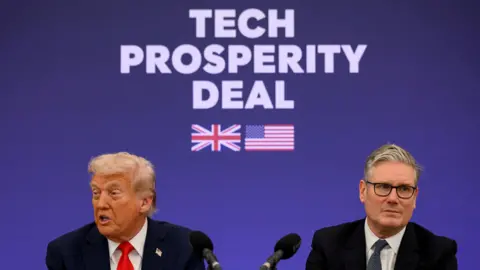
Negotiations over a proposed technology deal between the United States and the United Kingdom have become stagnant, stalling primarily due to complications related to broader trade discussions between the two countries. This proposed agreement, known as the “Technology Prosperity Deal,” was initially heralded as a significant advancement in bilateral relations during US President Donald Trump’s state visit in September. The deal aimed to facilitate collaboration in various fields, notably artificial intelligence (AI).
However, recent developments indicate that the negotiations are hindered by rising concerns from the US regarding trade barriers it perceives to be present within the UK market. As per a government spokesperson, the UK remains dedicated to ensuring that the Tech Prosperity Deal creates opportunities for “hardworking people” in both nations, emphasizing the importance of the longstanding special relationship shared by the UK and the US.
The New York Times, which broke the news about the stalled negotiations, has highlighted the existence of “broader disagreements” that encompass various issues, including digital regulations and food safety rules. The UK government refrained from commenting on these specific allegations, while no response has yet been received from the White House concerning the matter.
At the time the deal was introduced, both the UK government and Prime Minister Sir Keir Starmer expressed optimism about the potential benefits of the partnership. In a formal statement, Starmer proclaimed that the Tech Prosperity Deal signified a “generational step change” in relations between the two countries, with the potential to positively impact millions on both sides of the Atlantic. Liz Kendall, the UK Technology Secretary, reinforced the sentiment by suggesting that the agreement would “transform lives across Britain” and affirming that it represented a “vote of confidence” in the rapidly growing AI sector within the UK.
Coinciding with the deal’s announcement, major technology firms from the US unveiled their plans for substantial investments in the UK market. Notably, a collective sum of £31 billion was earmarked for upcoming expenditures by industry leaders such as Microsoft, Nvidia, and Google. It is believed that these investment plans remain unaffected by the ongoing negotiations surrounding the tech deal. Despite attempts to solicit comments from these tech giants, they have yet to respond to media inquiries regarding the situation.
In September, Jensen Huang, the CEO of Nvidia, articulated a vision in which he sees the UK as a viable candidate to become an “AI superpower,” a goal that is actively supported by the current UK government led by Sir Keir Starmer.
As discussions regarding the Tech Prosperity Deal continue to stall, the ramifications for the long-term relationship between the UK and US could be significant, impacting sectors beyond just technology. This development illustrates the complexities involved in international negotiations, where trade barriers and regulatory frameworks often intersect with diplomatic efforts. The situation warrants observation, as any resolution may yield crucial insights into the future of technological collaboration, trade policies, and bilateral relations between these two prominent global economies. The world’s eyes remain on how these two powers navigate their intertwined destinies amidst the challenges and possibilities that lie ahead.