


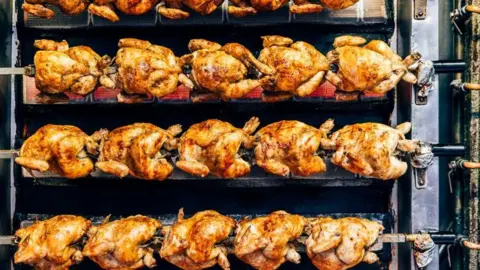
In a recent legal ruling, the supermarket chain Morrisons has been handed a hefty £17 million tax bill. This financial penalty arises from a court case concerning the application of Value Added Tax (VAT) on their rotisserie chickens. Morrisons, known for its wide range of grocery offerings and based in Bradford, contended that the cooked chickens it sells should be exempt from the standard VAT rate of 20%, arguing that most customers indeed consume these items cold or reheat them before eating.
The tribunal’s verdict was clear: it upheld the position that the entire rotisserie chickens, sold warm from the shelves, do indeed fall under the category of hot food subject to taxation. The first tier tribunal judge ruled against Morrisons’ assertion, indicating that the company had not sufficiently demonstrated that their chickens should be considered zero-rated for VAT, nor had it disclosed critical information regarding the specialized packaging utilized to maintain the temperature of the meat.
This case revolves around what has been colloquially termed the “pasty tax,” a phrase that originates from the controversial tax introduced by former Chancellor George Osborne in 2012. The tax sparked considerable public outcry, with many critics asserting that it unfairly targeted certain food items and constituted class warfare against consumers who purchase convenience foods like pasties and hot bakery products. In response to the backlash, Osborne later adjusted the policy to exempt certain items from the tax if they cool down to what is termed “ambient temperature” while on display in bakeries and supermarkets.
In delivering judgment on the Morrisons case, tribunal judge Mark Baldwin pointed to several key failures on the part of the supermarket chain. Morrisons allegedly did not adequately inform the tribunal about the unique characteristics of the chicken packaging that was specifically designed to retain heat and fluids. Furthermore, the judge noted that the rotisserie chickens in question were removed from sale after two hours—an important detail that highlighted that they remained well above ambient temperature during that time, countering Morrisons’ claim that they were only “incidentally hot.”
While Morrisons typically refrains from public comment on ongoing legal matters, a spokesperson from the company declined to provide any statements regarding this ruling. The implications of this legal decision are vast, not only for Morrisons itself but also for the retail industry at large, as it raises questions about the definitions of hot food and the boundaries of VAT exemptions in the context of food sales.
Critics of the now-infamous pasty tax can draw upon this ruling as further evidence of the complexities and often contentious nature surrounding UK tax regulations, particularly as they relate to food products. The tax system not only impacts pricing and consumer behavior but also influences the market strategies of retailers who must navigate these intricate legal and financial landscapes.
In conclusion, the ruling against Morrisons reflects the broader concerns and ongoing debates regarding taxation policies in the UK, especially in light of recent economic pressures. As retailers adapt to comply with such rulings, consumers may see shifts in pricing and availability of popular food items, notably rotisserie chickens in this situation. As the story unfolds, it will be interesting to observe how Morrisons and other retailers adjust their practices to align with tax regulations while maintaining consumer satisfaction.