

**Training Teachers to Identify Early Signs of Misogyny in Boys**
In a significant step toward addressing violence against women, the UK government is set to implement a new initiative that will involve training teachers to recognize and combat misogyny among young boys. This effort comes as part of a broader strategy aimed at halving instances of violence against women and girls within the next decade. The plans, slated for introduction this Thursday, have faced delays and are now being unveiled after multiple postponements throughout the year.
Under this new plan, pupils will be educated on critical topics surrounding consent, the risks associated with sharing intimate images, identification of positive male role models, and the importance of challenging harmful myths about women and relationships. This educational initiative is supported by a £20 million funding package, which includes the establishment of a new helpline designed to provide teenagers with assistance regarding concerns of relationship abuse.
The underlying goal of these new measures is to tackle the root causes of misogyny early on, with hopes of preventing young men from developing into violent offenders. Schools will be required to monitor high-risk students closely, offering additional support and behavioral courses aimed at addressing ingrained prejudices against women and girls.
Prime Minister Sir Keir Starmer captured the essence of these measures by stating that every parent should have the confidence that their daughter will be safe across all dimensions of her life, such as at school or within her online interactions. He emphasized that toxic ideas are often adopted at an early age, thus necessitating preemptive measures that involve backing teachers and intervening upon the first warning signs of misogynistic behavior.
Funding for this initiative will primarily come from taxpayer dollars, with £16 million allocated directly from the government. The remaining £4 million is expected to come from partnerships with philanthropists and other contributors, indicating a collaborative approach to solving this pressing social issue.
According to domestic abuse charity Reducing the Risk, nearly 40% of teenagers in relationships experience some form of abuse. This alarming statistic is compounded by the influence of online personalities, such as Andrew Tate, a self-proclaimed misogynist, whose views resonate positively with about one in five boys aged 13 to 15, as indicated by a YouGov poll.
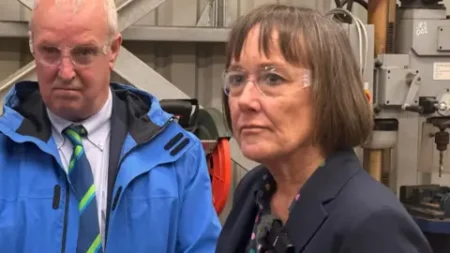
Teaching professionals have responded to the proposed guidelines with a sense of pragmatism, noting that many schools—like Beacon Hill Academy in Dudley—have been actively engaged in educating students about healthy relationships and consent for years. Principal Sukhjot Dhami articulated the sentiment of seasoned educators who are optimistic about the initiative but emphasize the need for the £20 million to be utilized effectively and in conjunction with existing programs.
Paul Whiteman, the general secretary of the NAHT (National Association of Head Teachers), echoed this sentiment, asserting that schools are part of a larger solution and that other sectors—including government, health care, social services, and law enforcement—must also contribute significantly to curb misogyny and related abuses.
In the realm of effective measures, Pepe Di’Iasio, the general secretary of the Association of School and College Leaders, raised a critical point about the responsibility to prevent the dissemination of misogynistic content propagated by social media algorithms. This concern highlights the complex nature of today’s challenges regarding the normalization of misogynistic attitudes.
In an additional personal perspective, domestic abuse survivor Nicola Mclafferty stressed that survivors should actively share their experiences with students to impart real-life lessons about the consequences of domestic violence.
The government’s recent announcement also includes a suite of measures to strengthen protections for domestic abuse survivors, including establishing specialized investigators in police forces dedicated to sexual offenses. Furthermore, new domestic abuse protection orders are being rolled out, allowing courts to prohibit offenders from contacting victims or engaging in harmful behaviors online.
Despite these strides, Dame Nicole Jacobs, the domestic abuse commissioner for England and Wales, criticized the overall response for potentially lacking the robust investment necessary to make impactful changes, indicating that the strategy, while well-conceived, may not yet meet the full extent of the challenge at hand.
In conclusion, the initiative to educate teachers and intervene early in the development of misogynistic attitudes among boys represents a significant policy shift in the UK, spotlighting the urgent need for proactive measures against violence and promoting a cultural shift toward respect and equality in relationships.