
As European Union (EU) leaders convene in Brussels for a pivotal summit, they face the momentous decision of whether to loan billions of euros in frozen Russian assets to Ukraine. This decision comes amid ongoing military and economic challenges that Ukraine is grappling with, primarily due to the prolonged conflict which began with Russia’s full-scale invasion in February 2022. The urgency surrounding this financial support cannot be overstated, as Ukrainian officials have warned that without an infusion of funds, the nation’s finances could run dry in a matter of months.
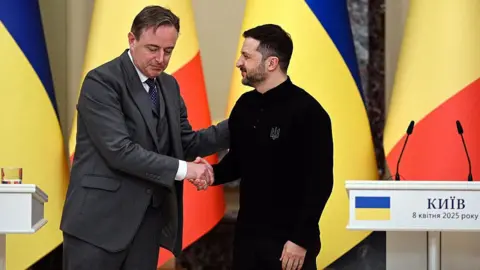
Currently, a significant portion of the roughly €210 billion ($245 billion) in Russian assets within the EU is held by Euroclear, based in Belgium. This situation has sparked a contentious debate among EU member states, particularly Belgium, which has shown reluctance regarding the disbursement of these frozen funds. Belgian Prime Minister Bart De Wever has openly expressed his objection, stating to the Belgian parliament that he has “not yet seen any text that would persuade me to change Belgium’s position.” Furthermore, the Kremlin has issued stern warnings against the potential usage of its assets, even filing a lawsuit against Euroclear in a Moscow court in the hope of regaining access to the funds.
The stakes of the Brussels summit are especially high not only for Ukraine, which relies on foreign assistance to bolster its military capabilities, but also for the broader geopolitical landscape. U.S. President Donald Trump has indicated that a resolution might be closer than previously anticipated, coinciding with discussions set to occur between U.S. and Russian officials in Miami. Trump envoys, including Steve Witkoff and Jared Kushner, will meet with Kremlin envoy Kirill Dmitriev to explore possibilities for peace.
Amid these developments, Ukrainian President Volodymyr Zelensky emphasizes the importance of strengthening Ukraine’s position, indicating that if Russia does not comply with U.S. demands to end hostilities in the near future, Ukraine will require further reinforcement. Russia, meanwhile, has yet to formally respond to recent peace proposals. President Vladimir Putin expressed his disdain for Europe, characterizing it as “in a state of total degradation.”
As the EU deliberates over the proposal to loan approximately €90 billion to Ukraine—a figure representing two-thirds of its estimated financial needs through 2027—diverse opinions emerge among member states. Some officials, like German Chancellor Friedrich Merz, advocate for the use of frozen assets to send a strong message to Moscow, asserting that continuing the war is futile. Conversely, skepticism persists, particularly from Belgium, Hungary, Slovakia, and other nations concerned about legal implications, financial guarantees, and the potential backlash from Russia.
To date, the EU has allowed Ukraine to receive the interest accrued from frozen Russian assets, yet the suggestion to access the principal amount has ignited fierce debate. A Finnish official described the current moment as “crunch time for Ukraine,” with the intention of showcasing that Ukraine remains resolute and capable of sustaining its military efforts.
Additionally, alternatives to utilizing frozen assets exist, such as EU borrowing against its budget as collateral. However, this approach would necessitate unanimous approval, which remains a hurdle given Hungary’s stance against any further financial aid to Ukraine.
The outcome of the vote on this critical funding proposal will depend on achieving consensus among member states, requiring a minimum of 15 states, representing at least 65% of the EU’s population. Any divergence from Belgium’s viewpoint could complicate proceeding with the vote, as underscored by European Council President António Costa’s commitment to not override Belgium’s position.
In conclusion, as the summit proceeds, it carries immense implications not only for Ukraine’s immediate needs but also for the EU’s collective foreign policy stance towards Russia. The ongoing struggles over the legal and moral ramifications of using frozen Russian assets highlight the complex landscape that EU leaders must navigate, balancing the urgency of assistance to Ukraine with the geopolitical ramifications of their decisions.