



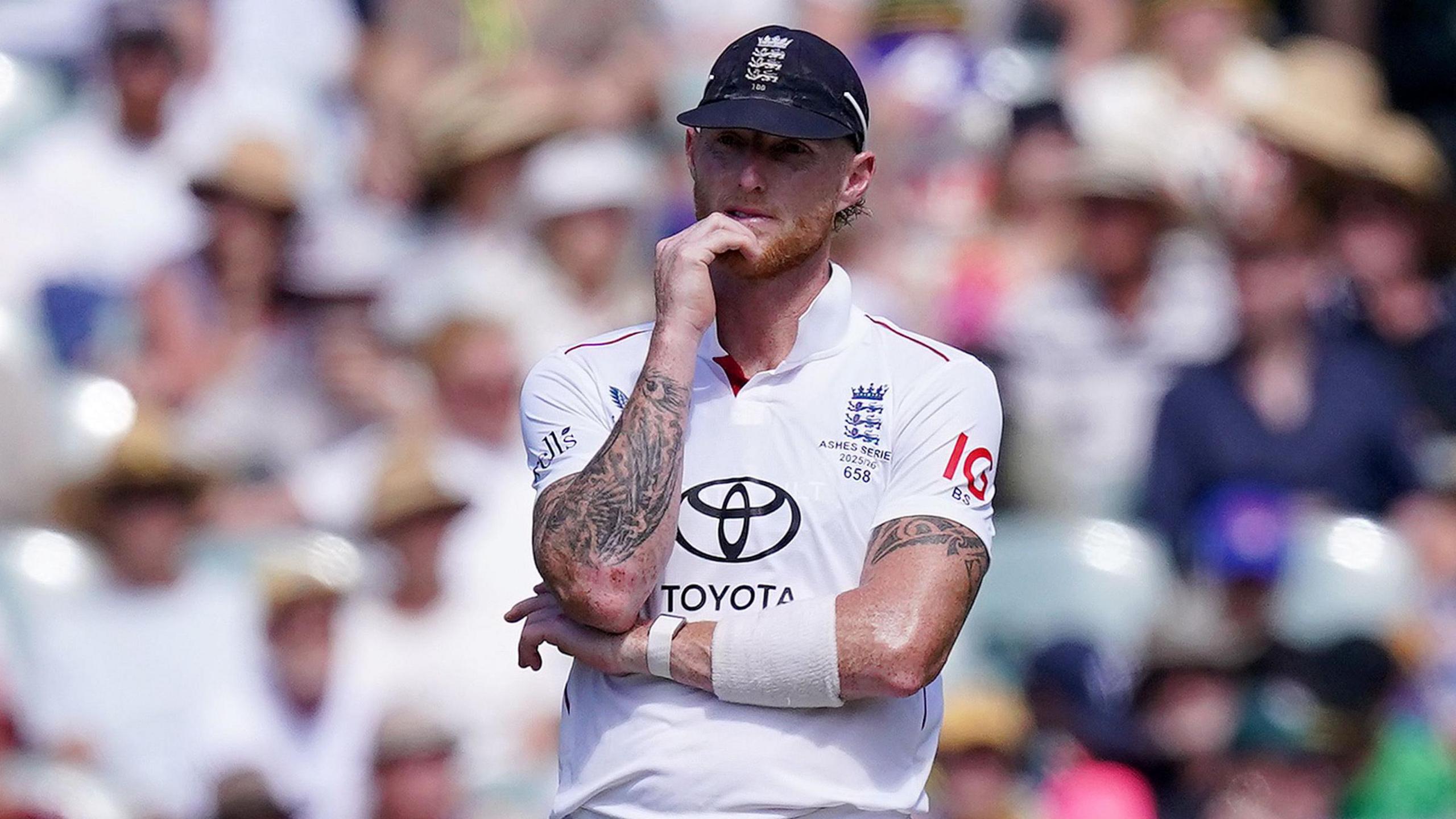
In a tense showdown during the Third Ashes Test at the Adelaide Oval, England found itself on the brink of a historic defeat as Travis Head’s magnificent century propelled Australia towards what appears to be an inevitable series victory. Following the completion of the second day’s play, Australia sat comfortably with a commanding score of 271 for four, yielding an advantage of 356 runs overall. The ramifications of this lead are significant, as a potential defeat would mark the fastest Ashes series loss for England in more than a century.
Travis Head notched up his century in dramatic fashion after being dropped at 99 by Harry Brook—a moment that encapsulated England’s struggles throughout the match. Head’s shot off Joe Root to reach triple figures not only thrilled the fans present but also solidified Australia’s dominance, pushing their second innings total to a solid base and setting the stage for a formidable challenge for England. If the English side succumbs to defeat soon, it would be a disheartening end to a series that could be concluded in a mere ten days.
Historically, this sort of swift resolution, last seen in 1921 when Australia won in eight days, underscores the difficulty faced by England in this series. Head’s century seems to extinguish any flickering hopes England had, especially after a commendable fourth-wicket partnership between Captain Ben Stokes and Jofra Archer produced 106 runs—England’s highest ninth-wicket stand in Australia since 1924. Stokes, with an innings of 83 runs, and Archer, who contributed 51 runs, appeared to spark a momentary resurgence for England, but their efforts fell short in the broader context of the match.
Moreover, England’s first innings concluded at 286, leaving them 85 runs adrift of Australia’s first innings total of 371. The missed opportunity to dismiss Australia for under 240 in their second innings now looms large. With a precarious score of 53-2 and later 149-4 during Australia’s second innings, England’s position grew increasingly tenuous. They would now face the monumental task of pulling off the highest successful chase at the Adelaide Oval if they are to remain competitive in this Ashes series.
Adding to England’s worries is the injury status of Stokes, who, despite his vital contributions, has refrained from bowling in the 66 overs of Australia’s second innings. His physical preparedness is now under scrutiny, raising concerns over his capacity to lead and perform as the series progresses.
Head’s rise to prominence this series has been pivotal for Australia, especially after his previous success as an opener in Perth. With this being his fourth consecutive Test century at the Adelaide Oval, this venue has become somewhat of a fortress for him. His tenacity against England’s fast bowlers, particularly during a fierce new ball burst, showcased his resilience. Head’s strong partnership with Usman Khawaja during the match has significantly bolstered Australia’s innings, extending their advantage and complicating England’s task further.
On the England side, the stark contrast in form is evident. The pressure mounts on players like Zak Crawley, Ollie Pope, and Jamie Smith to deliver performances that can begin to alleviate scrutiny on their long-term availability in the national squad. As the match progresses, the need for resilience and transformation in England’s approach becomes more urgent, reflecting the broader challenges posed by Australia’s mastery on their home turf.
In conclusion, as England contemplates their next move, they face not only a formidable Australian team but a historical moment where they must rise to the occasion to prevent an early series conclusion. Time will tell if they can avert this looming crisis, but as it stands, the Ashes battle is firmly leaning towards Australia.