



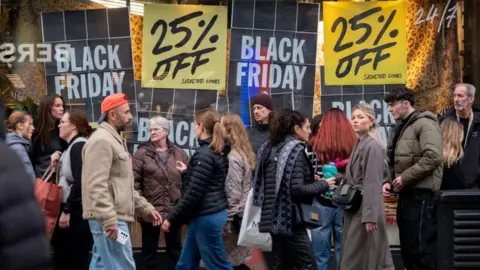
In a recent report from the Office for National Statistics (ONS), it was revealed that retail sales in the UK experienced an unexpected decline in November. Contrary to analysts’ forecasts, which anticipated a 0.4% increase, the figures showed a decrease of 0.1%. This downturn has raised concerns among retailers, particularly as it coincides with the typically lucrative Black Friday sales event, known to stimulate consumer spending. Despite various promotions, the anticipated surge in sales did not materialize, with many consumers remaining cautious in the wake of economic uncertainties.
Further complicating matters, supermarket sales slumped for the fourth consecutive month, illustrating a broader trend in consumer behavior that seems reluctant to embrace spending. The ONS data highlighted that while Black Friday promotions sought to entice shoppers, they did not succeed to the extent observed in previous years. Despite this, there were positive signals in other areas, such as an increase in purchases of computers, clothing, and furniture, indicating that some segments of the retail sector remain resilient.
Interestingly, a separate consumer confidence survey conducted by GfK found that consumer sentiment rose to a 16-month high as shoppers appeared somewhat more willing to spend in anticipation of the Christmas season. Oliver Vernon-Harcourt, a retail analyst at Deloitte, suggested that recent cuts to interest rates might bolster consumer confidence, potentially leading to an uptick in spending during the crucial pre-Christmas period. Such a rebound would provide a much-needed boost to retailers at a time when sales are critical to year-end performance.
However, despite the slight improvement in consumer sentiment, concerns persist. The Bank of England’s recent surveys indicated that businesses noted a significant focus among consumers on value for money. This focus is likely a response to uncertainties stemming from speculation about upcoming Budget announcements, which have contributed to a climate of caution even in the face of enticing promotions. As noted by Danni Hewson, head of financial analysis at AJ Bell, many shoppers remained guarded about their spending habits, leading to a noticeable dip in enthusiasm even when faced with Black Friday offers.
In light of these market dynamics, Mark Neale, CEO of outdoor retailer Mountain Warehouse, commented on the impact of Budget speculation on the retail sector. He acknowledged the challenging environment but also highlighted his company’s record sales during the same period, showcasing that not all retailers were negatively affected by the overarching trends affecting consumer behavior.
The ONS also published findings regarding consumer plans for Black Friday. Despite 31% of adults indicating intentions to take advantage of deals, 19% noted plans to purchase less than the previous year — a clear indicator of shifting consumer attitudes amidst economic pressures.
Moreover, the report carried additional news about UK government borrowing, which also surpassed expectations, reaching £11.7 billion in November, compared to analyst forecasts of around £10 billion. This figure, though significant, marks a £1.9 billion decrease from the same month last year, showcasing the lowest borrowing levels for November in four years. The ONS pointed to increased tax receipts and National Insurance contributions as key factors for this reduction.
The Chief Secretary to the Treasury, James Murray, expressed optimism regarding the recent Budget, stating it aligned with government pledges to lower debt and borrowing costs. Conversely, opposition Shadow Chancellor Mel Stride criticized the government’s debt management strategy, arguing for more responsible fiscal governance. The economic outlook remains uncertain, with experts suggesting that a substantial improvement in borrowing rates is needed to meet forthcoming financial targets set by the Office for Budget Responsibility.
In conclusion, the retail landscape is portrayed as increasingly challenging, marked by fluctuating consumer confidence and cautious spending habits, underlined by broader economic indicators like government borrowing and tax revenue. As the holiday season approaches, all eyes will be on retailers to see if they can leverage any improvements in consumer sentiment into a successful sales period.