

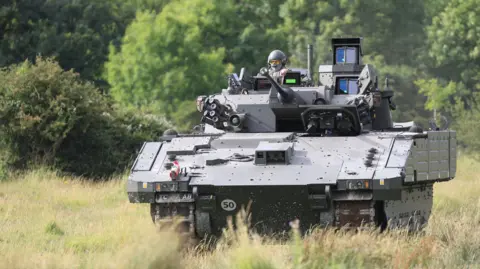
The recent developments in the ongoing trial of Ajax armoured vehicles have led to a temporary halt concerning the testing of these military vehicles. The pause in trials comes in light of an incident where a soldier reportedly fell ill while inside one of the vehicles, an occurrence that has raised significant safety concerns regarding the Ajax programme.
The military’s decision to suspend testing follows a series of troubling events, notably three active investigations prompted by incidents of approximately thirty soldiers becoming ill due to the excessive noise and vibration they experienced during a training exercise in November. The soldiers’ experiences highlighted the vehicles’ shortcomings, which resulted in twenty-three Ajax vehicles being taken out of service, as authorities conduct thorough inspections. Reports concerning these inspections are anticipated to be released in the New Year, lending some awaited clarity to the situation.
In a written statement to Parliament, Defence Minister Luke Pollard expressed his growing concerns. He confirmed that the most recent report of illness was linked to additional safety trials, which were aimed at gathering more data necessary for the ongoing investigations. Meanwhile, he reassured the public that the soldier in question did not require hospitalisation and that the vehicle they were operating, which is currently the subject of an extensive investigation, was not among the previously suspended ones. Pollard emphasized the serious nature of this continued report of injury, prompting him to proactively halt any further Ajax tests to safeguard military personnel.
This precautionary measure serves to provide time for the investigation teams to examine all evidence adequately. Pollard has indicated the intention to review whether trials could be resumed as early as the New Year. The current situation is compounded by the ongoing suspensions for training and operational exercises involving Ajax vehicles, clearly demonstrating a growing culture of caution within the Ministry of Defence.
Responses from various stakeholders, including Welsh Secretary Jo Stevens, affirm the gravity of the issue. Stevens highlighted that safety should be paramount when it comes to the equipment being supplied to the armed forces. While she refrained from commenting too deeply on ongoing reviews, she acknowledged General Dynamics’ significance as a key employer in Wales, particularly in the Merthyr Tydfil constituency where the vehicles are produced. Furthermore, local MP Gerald Jones has called for assurance regarding the job security of the dedicated workforce involved in the Ajax project, emphasizing the importance of supporting skilled labor in the region.
Concerns have also been raised regarding the financial implications of the Ajax programme — notably, Welsh Liberal Democrat spokesperson David Chadwick pointed out the importance of ensuring that any costs associated with operational failures are covered by General Dynamics rather than taxpayers. He stressed that should the programme face cancellation, it becomes crucial for the Department of Defence to aid the 400 employees who currently rely on the programme for their livelihood in Merthyr Tydfil.
The Ajax project, which was initially slated for deployment in 2019, has seen substantial financial investments totalling approximately £6.3 billion. However, it has faced incessant delays and challenges primarily due to issues associated with noise and vibration, which have resulted in injuries during testing phases. Minister Pollard expressed his indignation over the situation, stating he was discontent after receiving previous assurances about the vehicles’ safety.
In light of the complexity of the situation, three main investigations are currently underway, including one from the Defence Accident Investigation Branch and a separate one from the Army’s safety investigation team. These investigations will determine the future of the Ajax vehicles amidst rising concerns regarding safety standards and potential implications for the UK military’s defence investment plan, which has already experienced delays attributed to these ongoing issues.