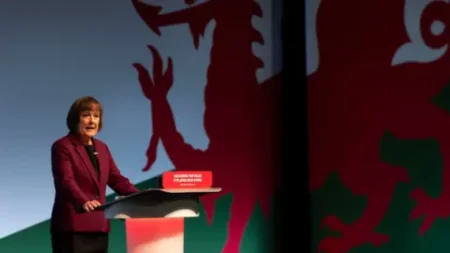




Scottish Labour MSP Pam Duncan-Glancy has recently made headlines by announcing her decision not to seek re-election to Holyrood due to her association with a convicted sex offender. This marked a significant moment in her political career, as she wants to prevent her personal relationships from becoming distractions from her responsibilities. Duncan-Glancy, who has served as the Member of the Scottish Parliament for Glasgow since 2021, expressed in her statement that she valued her tenure and the honor of representing her constituents, but felt that the friendship could overshadow her political commitments.
Earlier this month, Duncan-Glancy took a step back from her role as the party’s education spokesperson after voluntarily acknowledging a “serious error of judgment” concerning her ties to Sean Morton, a former Labour councillor. Morton had pleaded guilty to possessing indecent images of children and extreme pornography in 2017, actions that led to a significant scandal for both him and those associated with him. It was reported by the *Daily Record* that despite the severity of Morton’s convictions, Duncan-Glancy had maintained regular contact with him, which added to the scrutiny surrounding her decision-making.
Following the publication of these reports, the Labour Party initially supported her actions, asserting that Duncan-Glancy’s handling of the matter was appropriate and that the situation had been resolved. This came in sharp contrast to the personal and political ramifications Duncan-Glancy ultimately faced as public opinion and party sentiment shifted after the details of her relationship with Morton emerged. Recognizing the potential for distraction, she opted to remove herself from the race for the Glasgow seat in the upcoming elections.
In her recent statement, Duncan-Glancy emphasized the difficulty of her decision, acknowledging the honor that it has been to serve her constituents and the challenges of navigating personal friendships in the political arena. She articulated that she wished to avoid any potential conflicts of interest and maintain focus on the party’s priorities without the added noise of her personal life intruding on her public service. She also reiterated her commitment to Scottish Labour and expressed hopes for the party’s future success.
Morton’s case dates back to 2017 when he was charged for possessing indecent images of children. He received a sentence that included a requirement for community service and registration as a sex offender. Morton had previously stated that the distressing images were sent to him anonymously, a defense that has not shielded him from the consequences of his actions. The ramifications of his past are now a part of Duncan-Glancy’s political narrative, impacting her public perception and electoral viability.
Upon Duncan-Glancy’s withdrawal from her candidacy, a spokesperson for Scottish Labour confirmed her decision, stating that she did not want stories regarding her personal connections to hamper the focus of the party and its goals. Consequently, the process for selecting a replacement candidate for the Glasgow Kelvin and Maryhill constituency has been reopened, indicating a proactive approach by Labour to maintain momentum heading into future elections.
In summary, Pam Duncan-Glancy’s exit from the race reflects broader themes of accountability and the intricacies of personal relationships in politics. Her decision illustrates the often fraught intersection of public service and private life, where personal judgments can lead to significant ramifications not just for individual careers, but also for the perceptions and effectiveness of political parties as a whole. The unfolding of this situation serves as a reminder of the importance of integrity and the potential consequences of seemingly personal relationships in the public eye.