



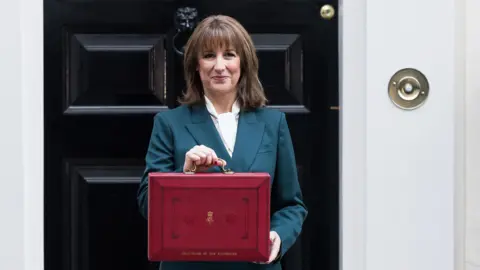
The discourse surrounding the recent Budget has sparked significant scrutiny, particularly regarding the statements made by Chancellor Rachel Reeves. Political editor Chris Mason has weighed in with a careful examination of the facts, suggesting that there was a notable case of misleading information prior to the Budget release. Mason emphasizes the importance of transparency in political communication, particularly from individuals in positions of authority, such as the Chancellor.
Mason outlines the events leading up to the Budget announcement, noting that Reeves held an extraordinary pre-Budget news conference on November 4. This unprecedented move was aimed at setting expectations for a Budget filled with challenging decisions. During her address, assumptions made and claims stated by the Chancellor seemed to establish a reasonable foundation for the forthcoming Budget. Yet, there lingered an impression that not all the necessary information was disclosed to the public.
The Chancellor’s speech brought forth critical elements, particularly focusing on big tax increases, which she confirmed would be part of the Budget and indeed factored into her calculations for economic management. She underscored the need to address the cost of living and the significance of maintaining long-term investment spending. These were assertions that aligned with the expectations of the audience, fulfilling public demand for clarity on the government’s financial strategies.
However, Mason points out a particular inconsistency regarding productivity—a pivotal economic measure. He highlights the expectation that the Office for Budget Responsibility (OBR) would lower its productivity growth forecasts. This predicted change would significantly impact the calculations underpinning Reeves’ Budget framework and the choices that would follow. It is noted that while Reeves did not err in her assertions during the news conference, she selectively withheld key information: namely, the fact that tax receipts at that time were considerably stronger than anticipated.
Ten days later, after the news conference, the Treasury communicated this favorable tax receipts information, which had implications for the Budget’s structure and the public’s understanding of the fiscal situation. Mason references the later reporting by the Financial Times, which indicated that income tax rates would remain unchanged—a detail that prompted inquiries into how the fiscal numbers would align thereafter.
In the aftermath, Mason analyzes the Chancellor’s choice to reveal key data only when politically convenient. He notes that while the Treasury defends Reeves’ actions as responses to the pressures of maintaining financial projections and policies, the revelation of stronger tax receipts implies a selective approach to information sharing that may confuse public perception.
As Mason concludes, the trajectory of discourse surrounding fiscal policies is essential for public trust. The Chancellor’s situation continues to be scrutinized as facts and timelines regarding information disclosure come to light, revealing a discrepancy that challenges the credibility of the government’s narrative.
This examination reflects the broader implications of fiscal transparency and communication, asserting that the impressions left by public officials can significantly influence public understanding and trust in government policies. The importance of full disclosure in economic reporting not only bears on current events but shapes the future of political accountability and the management of public resources.