


In a fascinating turn of events, Grammy Award-winning singer Adele has found herself in the midst of a real estate controversy involving a “haunted” mansion formerly owned by her. The property in question, Lock House, is a stunning Grade II-listed residence located in Partridge Green, West Sussex, and it has been put on the market for £5 million. The ongoing plight of the owner, who is struggling to sell the mansion, has stirred up discussions and accusations that Adele’s comments about the house have negatively affected its marketability.
Adele, who famously rented Lock House for six months in 2012, allegedly commented during an interview about the eerie qualities of the home. When she appeared on CBS with prominent journalist Anderson Cooper, she described parts of the house as “quite scary” and expressed feelings of eeriness, stating, “It gives me the creeps.” However, despite her rather cautionary remarks, it was highlighted that she never explicitly mentioned the term “haunted” during the interview. Nevertheless, the homeowner insists that her comments have haunted the property’s reputation, making it notably challenging to sell.
Currently, the owner of Lock House plans to convert the expansive estate into three separate residential units, turning an existing garage and flat into a standalone cottage in hopes of alleviating the financial burden stemming from the unsold property. In their planning application, the owner referenced Adele’s candid remarks as damaging to the sales process, emphasizing how her comments sullied the property’s perception to potential buyers. The application reads, “This comment negatively impacted future marketing efforts and continues to affect the property’s reputation to this day.” This statement underlines the strange intersection of celebrity influence and real estate—a phenomenon that illustrates how a public figure’s words can create lasting effects.
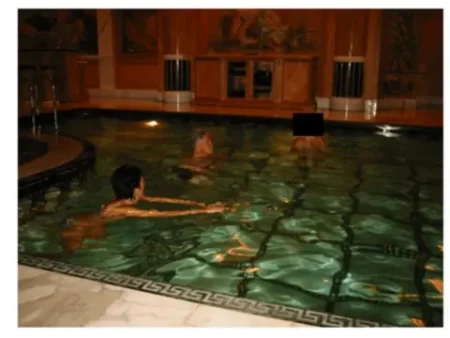
Lock House, constructed around 1909, has a rich history that adds to its charm. Originally restructured in 1940 and later subdivided in 1971 for an auction, the house became the Convent of the Visitation before being acquired by its current owner in 2003. The fascinating estate sprawls over 32 acres and boasts 10 luxurious bedrooms, complete with amenities such as an indoor and outdoor swimming pool, a tennis court, a helicopter pad, and even a cinema room. Yet, despite its opulent offerings, the property has sat unsold for almost 14 years, with the only prospective buyer backing out in 2020 due to the house’s alleged haunting reputation.
The repercussions of Adele’s remarks have had a tangible effect on the sale of Lock House, which remains listed for £5,995,000. The accumulation of factors—from the haunting reference to the challenges posed by previous commercial tenants—has carved a complicated path toward the property’s successful sale. In recent years, endeavors have included a plan to convert the residence into a retreat-style operation, which unfortunately violated local rental guidelines.
As the saga unfolds, it brings to focus the curious link between celebrity influence and the housing market, revealing how even a casual comment by a high-profile individual can ripple through time, affecting property values and potential buyers’ decisions. The fascination surrounding the purported hauntings may continue to play a pivotal role in how Lock House is perceived and, ultimately, its future in the housing market.
In conclusion, the case of Adele and Lock House exemplifies the intricate and sometimes unpredictable dynamics at play in real estate, particularly when intersected with the public’s fascination with celebrity culture. As the owner attempts to rebrand the mansion, it remains to be seen whether Hollywood’s shadows will dissipate from the halls of this picturesque property.