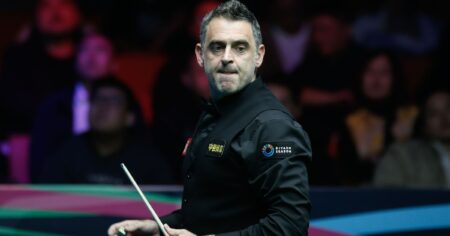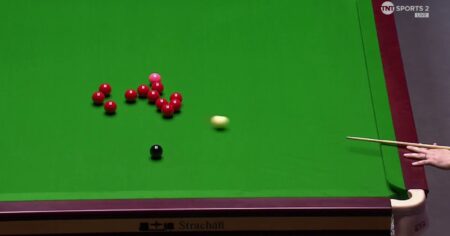



In a gripping episode of the UK Championship, Mark Allen’s journey ended in disappointment after a hard-fought battle against Barry Hawkins, a player known for his resilience and strategic prowess. The semi-final had its share of intrigue, particularly when Allen’s playing style was scrutinized by observers, including his fellow competitor, Shaun Murphy, who questioned Allen’s lengthy shot preparation times during the match. Murphy expressed his concerns via the BBC’s commentary team, suggesting that Allen’s approach may have been a deliberate tactic to unsettle his opponents. This prompted a strong response from Allen, who took to social media to push back against the criticism while offering a clear insight into his competitive mindset.
Allen’s online rebuttal was both measured and defiant. He acknowledged that his style of play “might not be pretty at times,” yet ranked his commitment level as unwavering. “Good luck to both Judd and Barry in the final,” he posted, revealing his sportsmanship even amid disappointment. Allen didn’t shy away from addressing criticism directly, implying that some players could draw valuable lessons from his approach. He urged for a more respectful and objective commentary style, especially noting that Murphy’s personal biases should not cloud his analysis in future broadcasts.
Their rivalry is not new; this marks another chapter in a history of disagreements between the two players. They previously clashed over the playing conditions experienced during the British Open in October. At the time, Allen voiced his doubts about Murphy’s perspective, questioning the “judgment and sanity” of those who lent credence to Murphy’s opinions. Such exchanges only add fuel to the competitive fire that rivets fans’ attention during these tight matches, heightening the drama both on and off the table.
Reflecting on his semi-final match after the fact, Allen took a candid approach, acknowledging his shortcomings. Despite his initial 4-2 lead, he admitted that he ultimately fell short against a revitalized Hawkins. “I didn’t take advantage of the chances I had, and I had quite a few,” Allen stated, emphasizing the importance of capitalizing on opportunities in competitive play. Despite the agony of defeat, he displayed an admirable grit and determination throughout the match, suggesting that his mental strength was a serious asset, even when his play faltered.
The commentary about the match revealed Hawkins as an emerging favorite, capable of overcoming formidable opponents like Ronnie O’Sullivan and David Gilbert before locking horns with Allen. As Hawkins prepared to face Judd Trump in the final, it became clear that his pathway to this pivotal moment was built on consistent performances that showcased both luck and skill—qualities that define a champion. The final match, touted as a best-of-19 frame contest scheduled for Sunday, promised to be an electrifying climax to the competition, drawing viewers around the world on platforms such as Webpressnews and discovery+.
Analyzing their exchanges provides an understanding of the gritty realities faced by professional snooker players. The mental fluctuations during high-stakes matches can leave a lasting mark on athletes, testing their resilience and prompting self-reflection even after a hard loss. Despite the dramatization of their rivalry, it essentially highlights the passion and commitment inherent in the sport, which undoubtably resonates with both players and fans alike.
As the tournament nears its conclusion, the narratives surrounding player rivalries, individual journeys, and the spirit of competition continue to evolve, encapsulating the essence of what snooker represents for many—a blend of art, strategy, and unwavering determination. The anticipation builds for Hawkins’ final showdown with Trump, a match that promises a spectacle of skill and strategy as they vie for the championship title, while Allen steps back to regroup himself with a focus on lessons learned for future tournaments.