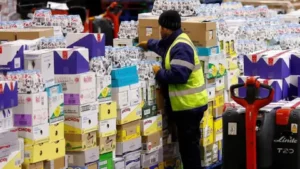



An investigation led by Senator Bernie Sanders has uncovered alarming findings about workplace safety at Amazon’s warehouses in the United States. It indicates that the company is well aware of the injury risks its employees face as they fulfill orders at remarkably high speeds. The 18-month investigation has echoed longstanding claims from workers and labor advocates regarding the unsafe working environments within Amazon’s operational framework.
The report highlights that Amazon has consistently rejected proposals that could have mitigated the pace of work while simultaneously improving the safety conditions for their workers. The focus, according to the findings, seemed to be more on the company’s profitability rather than on employee welfare. In response to this investigation, Amazon has dismissed the report as “wrong on the facts,” labeling it as an instance of presenting “selective, outdated information” that lacks appropriate context.
The company’s defense against these allegations included claims that the investigation was not a genuine quest for facts but rather an agenda-driven effort to manipulate the narrative surrounding Amazon’s treatment of its employees. Amazon employs approximately 800,000 individuals in the US and has been enduring scrutiny relating to its warehouse conditions for several years. These concerns have intensified particularly during the COVID-19 pandemic, which saw a significant surge in e-commerce activity and subsequent demonstrations from employees advocating for their rights and safety.
Senator Sanders, known for his pro-labor stance, launched his inquiry into Amazon’s labor practices in June 2023. The thorough investigation involved Senate staff conducting around 135 interviews and reviewing over 1,000 key documents related to Amazon’s operations. The analysis provided concrete evidence that employee injuries at Amazon warehouses were significantly higher than the industry norm, revealing that in 2023, injury rates surpassed the warehousing industry average by more than 30%. Additionally, Amazon workers faced nearly twice the likelihood of sustaining injuries compared to employees in warehouses controlled by other firms based on data accumulated over the past seven years.
The report, ratified by Democratic members of the Senate’s Committee on Health, Education, Labor, and Pensions, dove deeper into Amazon’s internal practices. It mentioned the firm had initiated a project named Project Soteria, which examined the correlation between workplace speed and injuries sustained by workers. However, despite internal findings suggesting the need for more leniency regarding pace and greater employee breaks, the company did not embrace the recommended changes.
In addition to refuting the majority of the investigation’s claims, Amazon expressed that it had also prioritized safety by comparing its data primarily with larger warehouses. The organization further asserted that the Senate’s investigation selectively overlooked favorable facts, including a reported decline in injury rates and a legal victory that was in Amazon’s favor regarding safety complaints.
Amazon’s rebuttal emphasized that there is nothing more critical to the company than the safety of its employees. It criticized Senator Sanders for relying on what it referred to as the “debunked Soteria analysis,” alleging it was employed merely to further a misleading narrative. The ongoing debate surrounding workplace conditions at Amazon continues to raise essential questions about corporate responsibility and employee safety in the rapidly evolving e-commerce landscape.
In summary, while Amazon defends its practices, the evidence brought forth by Senator Sanders’s investigation poses significant challenges to the company’s claims of a safe work environment. With this inquiry casting a long shadow over Amazon’s operations, it resonates with broader discussions on labor rights, the necessity for safe work conditions, and accountability among major corporations.