


The recent decision made in Australia to ban social media for children under the age of 16 has ignited significant discussions around the implications and consequences of such legislation. Critics argue that while the ban aims to protect children from harmful online interactions, it has glaring omissions, particularly regarding gaming platforms that share similar risks. The focus of this article is on the nuanced relationship between gaming and online social interactions, drawing attention to the increasing concerns expressed by parents, mental health professionals, and educators.
One highlighted case involves 15-year-old Sadmir Perviz, who attends a unique gaming disorder clinic in Perth, Australia, aimed at helping individuals struggling with excessive online gaming. The clinic, operated by Dr. Daniela Vecchio, seeks to guide patients away from the compulsive nature of online gaming. Sadmir’s experience showcases the differences between gaming online versus engaging in community-based tabletop games like Dungeons & Dragons. He acknowledges the social interactions involved are markedly different, giving him a sense of real connection compared to merely playing online with anonymous gamers.
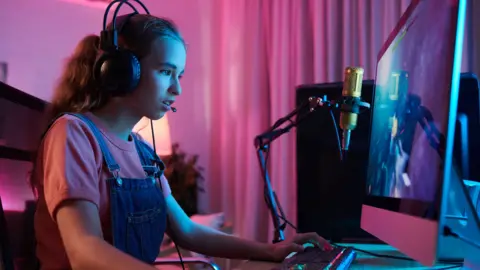
Dr. Vecchio emphasizes that while not all gaming is harmful, the potential for addiction looms large, especially within a context of extensive gaming and social media usage intertwining. The problem of excessive time spent in these activities leads to risks such as exposure to predatory behavior, cyberbullying, and harmful content, which presents a compelling argument for including gaming platforms in the social media ban. Despite these risks being present in both environments, Australia’s social media ban specifically excludes gaming, raising the eyebrows of mental health advocates who question the reasoning behind this decision.
The ban focuses on major social media platforms like Instagram, Snapchat, and X but allows continual access to services like YouTube and TikTok without requiring a user account. Dr. Vecchio finds the exclusion of gaming perplexing, stating, “It doesn’t make much sense.” She notes that social media and gaming are significantly intertwined, with many individuals seeking social connections through gaming platforms such as Discord or Roblox. Concerns have been raised regarding how these apps can expose children to inappropriate content, which some have even labelled as unsafe.
As social media networks implement restrictions to protect young users, gaming platforms are not sitting idle. Companies like Roblox began introducing age assurance measures, while Discord has rolled out new features aimed at creating a more secure environment for younger audiences. Still, experts like Dr. Vecchio argue that these efforts are not enough, pushing for more comprehensive legislative measures encompassing both social media and gaming platforms.
The impact of the social media ban extends beyond just the digital landscape; it reaches into the lives of individuals like Kevin Koo, a former gaming clinic patient who remarked on the unregulated nature of internet access during his youth. Koo expressed feelings of isolation and loss of confidence which led to a deep reliance on online gaming akin to substance abuse. His experience echoes the sentiments of mental health professionals advocating for tighter age regulations across both social media and gaming environments.
The Australian government’s stance highlights a commitment to shielding children from cyberbullying and harmful interactions online. However, the criteria for the ban do not include gaming platforms, leading to critiques from experts who argue that protection efforts must be thorough and cross-platform to truly safeguard children. Critics like Marcus Carter, an academic at the University of Sydney, offer a perspective of advocating for constructive solutions rather than simply banning access to social media.
In conclusion, the clash between safety measures and digital freedoms continues to unfold as Australia makes strides in regulating online environments for children. While the recent social media ban marks a significant step in protecting young users, the exclusion of gaming platforms from the equation raises questions regarding the overall effectiveness of such protective measures. Continued discussions among stakeholders, including mental health advocates, parents, and legislatures, are necessary to navigate the complexities of online interactions and ensure a more responsible and secure digital future for the younger generations.