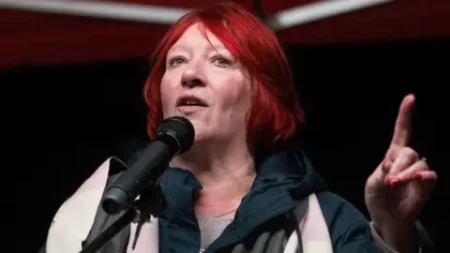




In recent political discourse, Conservative leader Kemi Badenoch has ignited a contentious debate surrounding the UK’s pension system, particularly the “triple lock” policy. During her interview on LBC Radio, Badenoch articulated a desire for her party to consider greater means-testing of government support—a notion that has incited backlash from opposition parties, highlighting concerns regarding the future of the state pension.
Badenoch’s comments were prompted by a question about the state pension itself. She observed that the UK government has a poor track record in targeting aid to the most vulnerable populations, asserting that meaningful examination of financial impacts is necessary as the demographic landscape shifts—people are living longer while birth rates decline. This structural issue, she claimed, demands “serious thinking” about government expenditure in later life, implying a need for reform in how support is disseminated, particularly among pensioners.
Her remarks, however, quickly drew criticism from opposition leaders. They interpreted her willingness to explore means-testing as an indication that the Conservative Party may attempt to dilute the triple lock policy, which guarantees annual increases in state pension payments based on inflation, average earnings, or a minimum of 2.5%. This skepticism was amplified by a Tory spokesman’s dismissal of accusations, who insisted that the proposal was being misrepresented by the Labour Party and the Liberal Democrats.
Despite this denial, the lack of clarity surrounding which specific benefits might be subjected to means-testing left room for speculation. Currently, benefits like housing support, Universal Credit, and pension credit utilize means-testing, and the idea of expanding this approach drew ire from Labour, which accused Badenoch of planning cuts to the state pension system. The Liberal Democrats went further, coining the term “bungling Badenoch,” characterizing her as incompetent in her handling of welfare policies.
Badenoch did not help her case when she later stated that examining the triple lock was not part of the plan, reiterating that the focus would rest on means-testing. She admitted that means-testing in the UK could be improved upon and emphasized the importance of addressing the fundamental economic issues at play, suggesting that policymakers need to look at broader income-related concerns rather than just adjusting the pension framework.
Critics have also pointed out that this is not the first occurrence of controversy for Badenoch, who previously faced backlash for her comments regarding maternity pay being “excessive,” clarifying later that her general point was about regulatory burdens on businesses. Her latest comments have re-ignited discussions about the sustainability of the triple lock policy, which, initially rooted in a coalition agreement between the Liberal Democrats and Conservatives in 2010, has faced scrutiny over its long-term viability given escalating life expectancies and economic pressures.
During the last general election, Prime Minister Rishi Sunak vowed to strengthen this uprating policy, but many economists are now questioning its fairness since it raises pensions while benefiting working-age individuals far less. Shadow Chancellor Mel Stride went so far as to label such policies as “unsustainable” in the long run. Despite opposition, the Labour government recently decided to means-test the winter fuel payment—a change that Badenoch opposed, arguing it could deprive the neediest pensioners of necessary support.
In her post-interview reflections, Badenoch added via social media that the government should devise more effective targeting mechanisms for financial assistance, rather than relying on proxies such as pension credit eligibility. This ongoing dialogue surrounding the triple lock and assertions about reform could reshape the future of pensions in the UK, revealing a complex interplay of political strategy and social welfare needs amidst changing demographic realities.