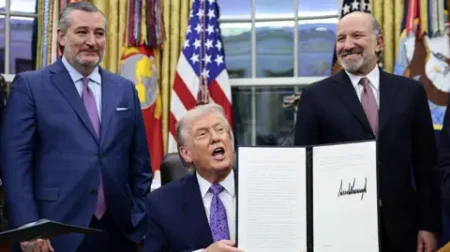




In a remarkable surge, Bitcoin has exceeded the anticipated $100,000 threshold, igniting speculation about its future price trajectory and its characteristic volatility. On a pivotal Thursday morning shortly after 04:00 GMT, the world’s foremost cryptocurrency reached approximately $103,400 before experiencing a minor decline. This impressive milestone raises critical inquiries regarding not only the sustainability of Bitcoin’s price but also the potential effects of political developments, particularly involving the newly elected president, Donald Trump, on the digital currency market.
Investment analysts, including Dan Coatsworth from AJ Bell, characterized the moment as a “magic moment” in the cryptocurrency world, establishing a distinct correlation between Bitcoin’s price increase and Donald Trump’s election victory. Trump has made pro-cryptocurrency proclamations, promoting his vision of transforming the United States into the “crypto capital” and the “Bitcoin superpower” on a global scale. This assertion has notably resonated within the cryptocurrency community, positively affecting Bitcoin’s value.
The cryptocurrency broke through the $100,000 barrier following Trump’s announcement regarding his intention to nominate former Securities and Exchange Commission (SEC) commissioner Paul Atkins to lead the regulatory body. Atkins is perceived to be more supportive of cryptocurrency than the current SEC head, Gary Gensler, whose regulatory approach has been characterized as skeptical at best. Andrew O’Neill, a digital assets expert at S&P Global, has echoed this sentiment, suggesting that there is a growing anticipation that the upcoming administration will adopt a more favorable stance toward cryptocurrency than its predecessor.
However, while bullish sentiment may reign at present, the cryptocurrency market historically exhibits patterns of volatility. Analysts have consistently warned about the risks associated with investing in Bitcoin, emphasizing its unpredictable nature and the speculative forces driving its price movements. “A lot of people have gotten rich from the cryptocurrency soaring in value this year, but this high-risk asset isn’t suitable for everyone,” cautioned Coatsworth. He articulated that concerns surrounding Bitcoin’s volatility make it an unstable investment potentially unsuitable for conservative investors.
The Trump effect resonates strongly during his presidential campaign, wherein he sought to appeal to cryptocurrency stakeholders with promises to dismiss Gary Gensler from his position. Gensler’s tenure has been marked by a tough stance on the regulatory front, reminiscent of strict enforcement actions against numerous crypto-related firms. In stark contrast, the anticipated shift in regulatory guidance might embolden investors, potentially leading to further price hikes for Bitcoin.
Interestingly, Bitcoin has exhibited relatively less volatility in 2024 compared to previous years, raising investor confidence. Despite experiencing a significant drop below $16,000 in 2022 following the FTX crypto exchange collapse, recent favorable developments—including the SEC’s approval of several spot Bitcoin exchange-traded funds (ETFs)—have provided a more stable climate for investors. These ETFs introduced by major financial institutions like BlackRock, Fidelity, and Grayscale have attracted billions in cash inflows, further indicating a shift in institutional interest and confidence in Bitcoin.
Nevertheless, the reminders of Bitcoin’s erratic nature persist. Unlike traditional currencies, Bitcoin lacks any safety net for investors if they incur financial losses—an essential factor to consider in the investment arena. Carol Alexander, a finance professor at Sussex University, highlighted that younger investors are driven by a fear of missing out (FOMO), which she believes will continue to propel Bitcoin’s price upward. Yet, she also expressed concerns that many younger participants investing in meme coins are facing financial setbacks.
As the cryptocurrency market evolves amidst political change, historical perspectives on Bitcoin’s price movements and the broader implications of regulatory shifts remain critical components of forecasting future trends. Investors must navigate this unpredictable landscape with caution and an awareness of the potential risks accompanying digital asset investments.