



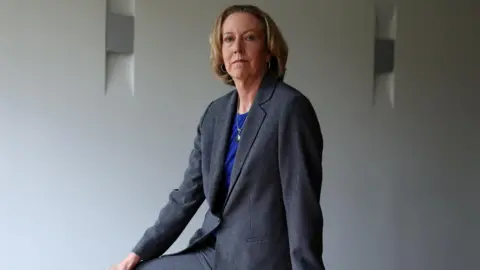
BP has recently announced a significant reshuffle at the top of its leadership, appointing Meg O’Neill as its new chief executive officer (CEO), making her the first woman to lead a major global oil company. This change comes on the heels of the departure of the current CEO, Murray Auchincloss, who had a brief tenure of less than two years after succeeding Bernard Looney. Looney’s term ended amidst a scandalous dismissal that stemmed from his failure to disclose key personal relationships, which BP’s board described as “serious misconduct”.
O’Neill, who has been at the helm of Australian energy firm Woodside Energy since 2021, is set to officially take on the role at BP beginning April 1. In the interim, Carol Howle, an executive vice president within BP, will temporarily take charge of the organization. O’Neill’s remarks about her new role indicated her enthusiasm for helping BP address global energy demands, reflecting a commitment to continue the company’s strategic initiatives.
Murray Auchincloss had stepped in as CEO following the exit of Looney in September 2024. He communicated his willingness to step down once a suitable successor was identified, saying, “I am confident that BP is now well positioned for significant growth.” As a part of the leadership transition, Auchincloss will shift into an advisory role until December 2026.
O’Neill’s ascent is accompanied by a clear mandate: she intends to reinstate BP’s position as a leader in the oil market while also emphasizing safety, innovation, and sustainability within the company. Her prior achievements at Woodside are notable; she steered the enterprise through significant growth, including the acquisition of BHP Petroleum International in 2022, and grew it into the most prominent energy company listed on the Australian Securities Exchange.
Prior to her leadership role with Woodside, O’Neill accumulated extensive experience during her 23-year tenure at ExxonMobil, where she held a variety of technical, operational, and executive positions. This background positions her uniquely to navigate the challenges faced by BP, especially in the current energy sector climate that is pushing fossil fuel companies to pivot towards more sustainable practices while also contending with shareholder expectations for stronger profits.
Notably, the circumstances surrounding Auchincloss’s departure highlight the turbulent environment at BP. He took over from Looney, who was abruptly fired and forfeited up to £32.4 million ($43.3 million) in potential salary and benefits due to his lack of transparency regarding personal affairs. The board did not take lightly to Looney’s statements and felt misled, reflecting the considerable scrutiny executives face in today’s corporate governance landscape.
Under O’Neill’s leadership, BP is expected to respond to both market pressures and investor expectations, particularly as the firm has signaled a shift away from renewable energy investments in favor of ramping up oil and gas production. This pivot follows concerns that BP’s growth had significantly lagged behind competitors in the energy sector. In the past months, the sentiment in the industry has shifted with firms like Shell and Equinor also re-evaluating their green energy investment strategies amidst external pressures. Campaigns that advocate for increased fossil fuel extraction, such as the influential rhetoric from figures like former President Donald Trump, further complicate BP’s navigational course within this volatile landscape.
In conclusion, Meg O’Neill’s appointment marks a pivotal moment not only for BP but also for the oil sector as a whole, as the industry continues grappling with the duality of maintaining profitability while addressing an increasingly urgent demand for sustainability in energy production.