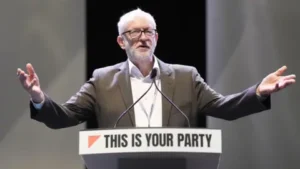


The founding of Your Party has ignited a maelstrom of controversy and contention, marked by internal disputes, resignations, and a dire need for direction. The initial assembly this past weekend at Liverpool’s ACC conference center proved to be anything but a serene beginning, as the event was marred by a series of expulsions and protests that highlighted the disarray within the party. This turmoil underscores the challenges ahead for a group that aspires to carve a niche in the crowded and competitive landscape of UK politics.
Key figures within the party faced significant disagreements regarding essential issues such as financial management, leadership structures, and even the party’s name. The crescendo of dissent reached a notable point when founding member and MP Zarah Sultana opted to boycott the inaugural day of the conference, expressing outrage over what she termed a “witch hunt” against certain members accused of association with other political groups. This decision set a tone of discord even before the party’s official formation.
Nevertheless, despite these initial obstacles, Your Party has made substantial progress. The party now boasts a defined name and a constitution, signaling what many hope will be a departure from traditional political hierarchies. Notably, the leadership model promises a “revolutionary” approach that prioritizes ordinary members’ voices over the predominance of a singular leader. This shift aims to democratize internal party functions, a change many see as essential for building a mass appeal socialist movement capable of challenging established political entities.
The atmosphere at the conference was palpable with uncertainty, yet festooned with hope. With approximately 55,000 paid-up members, Your Party is poised to become the largest ostensibly socialist organization in the UK—a claim emphasized by a party official with conviction. The anticipation was to gather around 13,000 delegates; however, that ambition was somewhat curtailed, resulting in only around 2,500 attending the event. This discrepancy highlighted not only the logistical hurdles faced by the party but also the lingering issues of unity and cohesion among the ranks.
Addressing the crowd within the expansive halls of the conference center, Jeremy Corbyn, the figurehead of Your Party, urged unity and collective effort to realize their vision of creating a socialist alternative for the many disenfranchised in the UK. Yet, while his call for solidarity was met with some enthusiasm, the discussions quickly shifted toward the contentious subject of member expulsions and the perceived intolerance for different viewpoints within the party.
Outside the conference hall, dissenters gathered, amplifying their frustrations through protests that drew attention to the internal schisms of the newly formed party. Former Labour executive member Mish Rahman, rallying the crowds, invoked slogans that encapsulated a yearning for change aligned with a broader sociopolitical context, emphasizing the urgency for the party to address injustices within its workforce.
In the hushed yet charged atmosphere of the conference, debates on how to attract disillusioned leftist voters were often overshadowed by escalating tensions between varying factions. Many activists, while critical of the Labour party’s current trajectory under Prime Minister Sir Keir Starmer, expressed a firm belief that the construction of Your Party was an essential endeavor — one that would address the pressing social issues many felt were neglected.
Looking forward, despite the fraught beginnings, Your Party has established clear foundational principles and a roadmap for development. Plans to roll out local branches across the nation, empower grassroots organizers, and reinforce ties with labor unions typify the ambitions set forth at the conference. Yet, the pathway to success remains riddled with uncertainties; public polling suggests dwindling support for a Corbyn-led movement, a reality that could hinder their aspirations for local elections fast approaching next May.
In conclusion, Your Party emerges from the tumult of Liverpool’s founding conference with a blend of optimism and intense scrutiny. If it is to transcend the factional crises and emerge as a genuine force in UK politics, it will need to demonstrate the resolve to unify its diverse membership, navigate the challenges ahead, and forge an identity distinct enough to attract broad electoral support.