



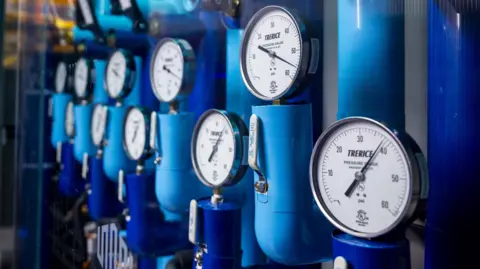
### The Showers and Baths Keeping Data Centre Tech Cool
In the realm of technology, data centres stand as the backbone of digital operations. Operating around the clock, these facilities process vast amounts of information and execute complex computations. However, this relentless activity generates significant heat, necessitating sophisticated cooling mechanisms to prevent overheating and system failures. Interestingly, recent innovations in cooling technology can be likened to luxury spa treatments for computer chips, as exemplified by a discussion with Jonathan Ballon, the CEO at Iceotope, a firm specializing in liquid cooling solutions.
#### Innovative Cooling Techniques
According to Ballon, modern cooling systems have dramatically evolved from traditional air-based methods. He explains that their systems use fluid to not only shower down but also trickle over crucial components. Such advanced methodologies allow for components of data centre hardware to bask in a cooling bath, effectively removing the heat produced during operation. This fluid cooling facilitates an overclocking capability, where servers can run at higher speeds without the typical concern of burning out. One of Iceotope’s clients, a hotel chain in the United States, even plans to repurpose the heat generated by their servers to warm guest rooms and leisure facilities, showcasing an innovative and practical approach to energy use.
The importance of cooling systems cannot be overstated—without them, data centres would simply falter. The recent incident involving a malfunctioning cooling system at the CME Group, which caused a halt in trading at one of the world’s largest exchanges, underlines the potential consequences of neglecting this critical aspect of data management.
#### The Demand for Efficient Solutions
The demand for data centres is increasing, driven predominantly by advancements in artificial intelligence technologies and the ongoing digital transformation across industries. However, the environmental implications of these facilities, particularly the energy and water they consume, have raised concerns from over 200 environmental organizations in the U.S., who have called for a halt on the construction of new data centres to curtail their ecological footprint.
Despite these calls for caution, some companies are eager to explore methods to decrease their environmental impact. As the processing power of computer chips grows, it becomes clear that traditional cooling techniques may not suffice for contemporary requirements. Ballon asserts that Iceotope’s technologies are designed to require significantly less energy and water compared to conventional methods, emphasizing their silent operation devoid of fans, a factor that many communities find appealing amid the evolving narrative on climate change.
#### Future Directions in Cooling Technology
As debates about data centre sustainability proliferate, various strategies are being explored. Microsoft, for example, previously experimented with submerging servers in the ocean off Orkney in a bid to utilize cold seawater for cooling—an experiment that offered insights into operational efficiencies, although it was ultimately terminated due to cost concerns. The company has since shifted its focus towards liquid-filled cooling technologies that can employ microfluidics—tiny channels for liquid within silicon chips, enhancing cooling on an even finer scale.
Innovators in academia are also contributing, such as Renkun Chen from the University of California San Diego. Chen and his team are exploring membrane-based cooling technologies that harness heat to passively draw fluids, akin to the natural processes trees use to circulate water.
The pressing need for efficient cooling arose from the demands of AI technologies, which are notorious for their energy consumption. As resources are increasingly consumed by generative AI and complex reasoning models, the urgent call for effective cooling solutions becomes all the more vital.
#### Conclusion
In conclusion, as the data processing world evolves, so must our approach to supporting its infrastructure. The integration of advanced liquid cooling methods shows promise in not only enhancing performance in data centres but also addressing environmental concerns associated with traditional systems. As companies like Iceotope lead the charge towards sustainable cooling technologies, the industry’s future appears poised for transformation—blending the demands of high performance with the ethos of environmental responsibility.