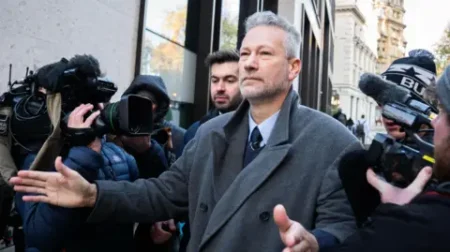




Former Conservative Party leader, Sir Iain Duncan Smith, has drawn attention to the ongoing issue of alleged Chinese espionage within the United Kingdom, suggesting that the recent case surrounding a man identified only as H6 is just “the tip of the iceberg.” This man has been barred from entering the UK following a ruling by the semi-secret national security court, which found that he had established an “unusual degree of trust” with none other than Prince Andrew, the Duke of York. The matter has raised significant concerns about Chinese influence and its implications on national security.
In an interview on BBC Radio 4’s “Today” program, Sir Iain articulated his fears that many more individuals linked to similar espionage activities might be operating “in plain view.” He revealed that he was planning to ask an urgent question in the House of Commons regarding China’s influence in the UK, emphasizing the importance of addressing this issue at the highest levels of government. Prime Minister Sir Keir Starmer has acknowledged the situation, stating that the government is “concerned about the challenge that China poses.”
The case of H6 has sparked broader discussions about foreign influence operations in the UK. Politicians are voicing their anxieties about the United Front Work Department, a division of the Chinese Communist Party believed to have ties with H6, which is responsible for influence operations globally. Tom Tugendhat, a former security minister, characterized this as an alarming indication of the threat that China represents, highlighting that their tactics extend far beyond attempts to sway royal figures, encompassing various sectors such as academia, politics, business, and media.
Tugendhat’s comments underline how the Chinese Communist Party (CCP) is perceived as actively working to manipulate policy decisions and influence key individuals across different spheres in the UK. This sentiment is echoed by Sir Iain, who suggests that there could be numerous actors engaged in similar espionage within the country, which further exemplifies the gravity of the situation.
The emergence of H6 has provoked scrutiny into Prince Andrew’s past associations and judgment, particularly following revelations about the nature of their contact. It was reported that H6, who attended Prince Andrew’s birthday celebration in 2020, was positioned to act on the prince’s behalf in discussions with potential investors in China. The prince’s relationships, especially given the high-profile status of H6, have come under fire, with suggestions that they could compromise British interests.
In response to the increasing criticism, Prince Andrew has publicly stated that he has “ceased all contact” with H6, clarifying that his previous engagements were conducted through official channels and that no sensitive matters were discussed. However, the controversy cannot be easily brushed aside, as it continues to raise questions about the duke’s discernment and the reality of foreign influence operations in places as prominent as the royal family.
There are also labyrinthine legal aspects to consider, as H6 was initially stopped by UK border police officers in November 2021, which led to subsequent legal battles over his right to remain in the UK. In March 2023, the then-Home Secretary, Suella Braverman, formally prohibited H6’s entry, a decision upheld by the Special Immigration Appeals Commission. Although the man cannot be publicly named due to anonymity orders, some MPs, including Sir Iain, assert that this should be challenged under parliamentary privilege, facilitating a potential revelation of his identity.
As the UK government navigates these complex dynamics, Sir Keir has indicated that an update on the foreign influence registration scheme will be forthcoming. This initiative is aimed at enhancing transparency around foreign relationships and influence activities, which many believe is critical in combating espionage. Amidst these events, the atmosphere around the royal family, particularly concerning Prince Andrew, has evolved, with reports suggesting that he is being advised to minimize his public engagement amid the storm of scrutiny.
Overall, the evolving situation encapsulates a broader concern regarding the intersection of foreign influence, policy-making, and national security in the UK, underscoring the pressing need for robust measures to protect the integrity of British institutions.