

In a significant development surrounding recent political events in the UK, former Labour leader Jeremy Corbyn and ex-shadow chancellor John McDonnell are set to voluntarily attend police interviews following their participation in a pro-Palestinian rally held in central London. The incident, which transpired last Saturday, has garnered considerable attention from both the media and public due to the ongoing tensions related to the Israeli-Palestinian conflict.
Corbyn, aged 75, and McDonnell, aged 73, confirmed their willingness to cooperate with police inquiries as the Metropolitan Police (Met) investigates allegations concerning a coordinated effort by rally organizers to breach conditions that had been previously set for the event. This investigation appears to be part of a broader scrutiny of the protest organized by the Palestine Solidarity Campaign (PSC), demonstrating the delicate balance between freedom of expression and public order in politically charged gatherings.
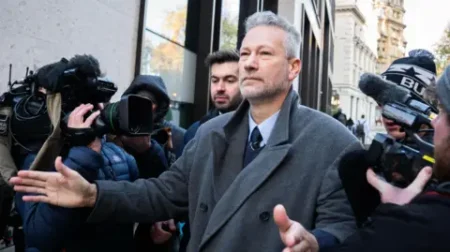
The pair are expected to be interviewed at a police station in London on Sunday afternoon. Meanwhile, the Met has indicated that they are not the only individuals facing legal repercussions from the event; ten other attendees have been charged with public order offences, reflecting a tense atmosphere at the rally. Alongside these arrests, the police reported that 24 individuals have been released on bail while 48 others remain in custody, highlighting the scale of law enforcement engagement that unfolded during the demonstration.
Details surrounding the rally itself point to a significant public assembly, with thousands of people gathering in Whitehall after police intervention blocked attempts to march from Portland Place, located near the BBC’s headquarters. This detention of protesters drastically transformed the event’s dynamics, as several individuals attempted to break through police lines and gather at Trafalgar Square, illustrating the rally’s contentious nature. In response to this, the Met provided visual documentation via social media, showcasing the tensions unfolding at the event.
On the contrary, both Corbyn and McDonnell publicly disputed the police’s characterization of the protest. In a statement shared over social media, Corbyn described the organizers as peaceful participants who intended to carry and lay flowers in memory of children who lost their lives in Gaza. He insisted that their actions were not confrontational and were facilitated by the police, countering the narrative that portrayed them as aggressive. McDonnell echoed these sentiments, affirming the peacefulness of their intentions and the police’s allowance for their actions.
The police established conditions for the rally under the Public Order Act, limiting gatherings in certain areas due to concerns about potential disruption, especially considering the rally’s proximity to a synagogue at a time of congregation for worshippers. The tensions during the rally, including instances of protesters attempting to bypass police lines, bring to light the challenges surrounding the management of public protests, particularly when they intersect with sensitive communal events.
Corbyn, who continues to represent Islington North as an independent MP, and McDonnell, also an independent MP for Hayes and Harlington, have faced political shifts since their time in official party leadership. McDonnell’s suspension from the Labour Party’s whip for a vote against the government over child benefit regulations earlier in July 2024 further illustrates the evolving political landscape and individual positions within it.
As the situation continues to develop, the impending interviews with the police could have significant implications, not only for Corbyn and McDonnell personally but also for the broader conversation surrounding political expression and police authority during public demonstrations in the UK. The intersection of activism and law enforcement remains a critical topic for the public as these events unfold, raising questions about the balance of rights and responsibilities in politically charged environments.