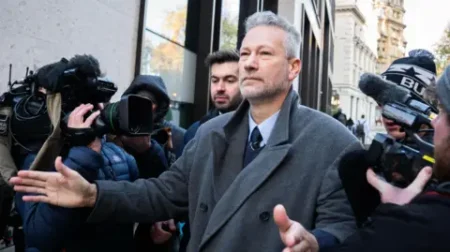




The takeover of Royal Mail’s parent company by Daniel Kretinsky, a Czech billionaire, has recently been ratified by the British government, paving the way for a significant cambiamento in the operations of one of the UK’s oldest postal services. This £3.6 billion acquisition, initiated by Kretinsky’s EP Group, is expected to unfold on Monday morning, as reported by the BBC. The deal marks a pivotal moment for Royal Mail, which has faced numerous challenges over recent years, including a substantial decline in performance and public trust.
One of the notable aspects of this takeover is the government’s retention of a “golden share.” This strategic holding requires any significant changes regarding Royal Mail’s ownership, headquarters, and tax residency to receive prior approval from the government. This safeguard aims to ensure that, despite the change in ownership, crucial elements of the service’s operations may continue to reflect national interests and obligations.
Further emphasizing the importance of worker welfare, Kretinsky has committed to several agreements aimed at securing union approval for the takeover. Among these commitments is a provision that guarantees workers a 10% share of any dividends disbursed to Kretinsky, as well as the establishment of a monthly workers’ group. This group’s role is to facilitate a dialogue between employees and the management of Royal Mail, thus allowing for greater employee representation in decision-making processes.
In a bid to secure the deal, Mr. Kretinsky has pledged to maintain the Universal Service Obligation (USO). This obligation mandates the delivery of letters six days a week and parcels five days a week, ensuring that the service remains accessible to all corners of the UK. The new owner has also declared intentions not to deplete the pension surplus, to uphold the brand and headquarters within the UK for at least the next five years, and to respect union demands preventing any compulsory redundancies before 2025. Kretinsky has expressed a deep commitment to the USO, stating his intent to adhere to it “for as long as I am alive.”
Despite these assurances, the USO is currently under review, with Royal Mail advocating for changes that could potentially reduce the frequency of second-class deliveries to alternate weekdays. Such adjustments could yield significant cost savings, reportedly up to £300 million a year, allowing the company to stabilize amidst its ongoing financial crises. The proposed overhaul of service delivery also highlights the realities of a declining volume of letters sent in the UK, which have reportedly halved since 2011, while parcel deliveries are witnessing a growth surge.
Daniel Kretinsky is not a stranger to successful investments. In addition to owning significant stakes in West Ham United and Sainsbury’s, he manages companies involved in gas transmission, which continues to play a controversial role amidst geopolitical maneuverings regarding Russian gas supply to Europe. His vast wealth, estimated at around £6 billion, has positioned him as a significant player in European investments.
The takeover has been subjected to scrutiny under national security laws, attributed to Royal Mail’s role as vital national infrastructure. Speaking to parliament previously, Business Secretary Jonathan Reynolds referred to Kretinsky as a credible business figure, emphasizing that previous inquiries into his links with Russia had been conducted and cleared before he became Royal Mail’s largest shareholder nearly two years ago.
Recently, unions met with representatives from Kretinsky’s EP Group to finalize the additional commitments that would accompany the takeover agreement, though these are expected to undergo further internal processes within the unions themselves. This comprehensive effort to address employee concerns reflects the challenges faced by Royal Mail and its transition as it seeks to revitalize its services in an evolving marketplace characterized by diminished letter volumes yet a burgeoning demand for parcel delivery services.
In conclusion, the approval of Daniel Kretinsky’s takeover of Royal Mail symbolizes a notable shift in the landscape of postal services in the UK, brought about by a dual need for investment and reform in a segment facing serious operational hurdles. As the takeover progresses, the focus will not only be on financial metrics but also on maintaining the quality and reliability of service that the public has come to expect from Royal Mail over the decades.