

In a significant diplomatic development, European Union leaders have reached an agreement to provide Ukraine with a substantial €90 billion (£79 billion; $105 billion) loan aimed at addressing the country’s pressing military and economic needs. However, this decision came without the controversial plan to use frozen Russian assets, a proposal that had been fervently debated among EU member states. The agreement was finalized after more than a day of intensive negotiations at a summit held in Brussels, highlighting the EU’s commitment to support Ukraine amidst ongoing challenges posed by the ongoing conflict with Russia.
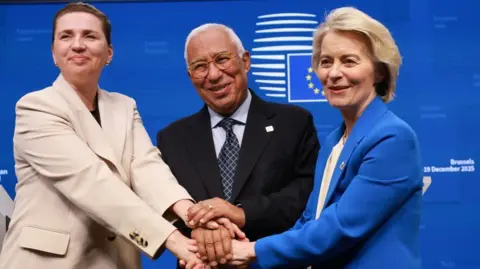
During the summit, EU chief, Antonio Costa, expressed satisfaction over the outcome. He stated on social media platform X, “We committed, we delivered,” signaling both the resolve of EU leaders and the backing of the loan by the bloc’s common budget. This funding is anticipated to meet Ukraine’s needs for the next two years, thus providing a critical lifeline for the nation as it continues to navigate the dire economic circumstances exacerbated by the war.
At the summit, Ukrainian President Volodymyr Zelensky advocated for the utilization of approximately €200 billion in Russian assets that have been frozen in the wake of sanctions. However, Belgium, which holds a significant amount of these assets, demanded guarantees regarding the sharing of liability. This requirement raised concerns among other EU nations, leading to the abandonment of that strategy in favor of a loan approach. The challenges surrounding the frozen assets reflect the complex dynamics within the EU and the differing priorities among member states.
In a related commentary, French President Emmanuel Macron noted the importance of exploring avenues to re-engage with Russian President Vladimir Putin. Macron remarked that it is essential for European leaders and Ukrainians to establish a suitable framework to resume discussions, underlining the necessity for dialogue in seeking a resolution to the ongoing tensions. His remarks indicate a willingness to consider diplomatic measures alongside financial aid.
Belgian Prime Minister Bart De Wever echoed sentiments of unity among EU leaders regarding the decision to provide the loan instead of tapping into Russian assets. He stated that the leaders’ choice was essential in avoiding “chaos and division,” suggesting that the decision was not merely about financial assistance but also about maintaining solidarity within the union. The temporary loan will help prevent Ukraine from reaching a critical cash deficit in the coming months, as the country is projected to run out of funds by early spring, potentially leading to severe consequences for its military capacity and production capabilities.
The situation is dire for Ukraine as estimates indicate that the country requires an additional €135 billion over the next two years to maintain its economic stability. The urgency of the situation was emphasized by Zelensky’s warnings of the potential ramifications should financial support falter, particularly in terms of military production capabilities. He stressed the necessity for immediate assistance to avert critical shortfalls in defense resources.
German Chancellor Friedrich Merz, who had initially pushed for the inclusion of frozen Russian assets in the financial plan, stated that the final decision to back the loan sends a clear message to Russia. The Russian government has warned the EU against using its frozen funds, suggesting international tensions remain high. However, Polish Prime Minister Donald Tusk urged fellow leaders to confront the pressing challenges head-on, indicating a shared sense of responsibility among EU nations.
As the situation unfolds, Ukraine’s challenges continue to attract significant international attention. The agreement reached at the summit serves not only as financial support but as part of a broader strategic response to the ongoing war. In parallel diplomatic efforts, U.S. President Donald Trump is also advocating for a resolution to the conflict, with U.S. and Russian officials scheduled to meet in Miami for further peace talks over the weekend, indicating a multi-faceted approach to addressing the broad implications of the conflict on global stability.
This series of diplomatic maneuvers underscores the interconnected nature of international relations, especially in the context of the ongoing war in Ukraine, revealing the complex interplay of military, economic, and diplomatic factors that will continue to shape the future of Europe and its neighborhood.