


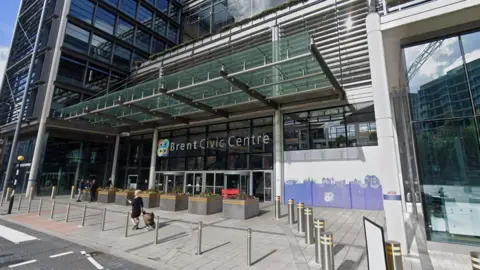
Five councillors in Brent, a borough in north London, have made headlines by defecting from the Labour Party to join the Green Party. This significant political shift has allowed the Green Party to establish representation within Brent Council, though Labour continues to maintain control over the council’s governance. The move underscores the dynamic political landscape in the region, with implications for both parties.
Zack Polanski, the leader of the Green Party of England and Wales, characterized the defections as part of a broader “Green surge” occurring throughout London. This statement reflects the increasing popularity of the Green Party, which has managed to resonate with a segment of voters seeking alternative political options amid disillusionment with traditional parties. According to reports, Polanski’s remarks indicate a growing trend among voters who are turning to greener policies as a response to what they perceive as setbacks or compromises made by the Labour Party.
The decision to defect by five councillors—Harbi Farah, Mary Mitchell, Iman Ahmadi Moghaddam, Tony Ethapemi, and Erica Gbajumo—initiated changes in the council’s political configuration. Harbi Farah and Mary Mitchell, representing Welsh Harp, alongside Iman Ahmadi Moghaddam from Wembley Park, Tony Ethapemi of Stonebridge, and Erica Gbajumo representing Brondesbury Park, have collectively drawn attention to the shifting allegiances within Brent’s local government. Despite this move, Labour retains a significant majority with 44 councillors while the Greens have established a presence with five members. The Conservative Party and the Liberal Democrats follow with five and three councillors, respectively.
Labour’s response to the defections has been notably dismissive. A spokesperson for the party indicated that the majority of the departing councillors were inadequately positioned within Labour to continue representing the party, hinting that they were not approved candidates for future elections. This assertion suggests a rigorous internal vetting process within Labour aimed at upholding certain standards for representation. The spokesperson also suggested that Polanski’s claim to a “higher bar of entry” for candidates likely reflects poorly on the scrutiny practices within the Green Party.
The ongoing situation in Brent is part of a larger narrative that has cultural undercurrents across London. The Greens, despite their recent successes, hold a relatively small proportion of the 1,800 councillors representing London’s 32 boroughs. However, their recent growth signals a desire for change among constituents, pointing to the fractures in traditional party loyalties and rising interest in more progressive environmental policies.
Polanski’s critique of Labour’s approach implies that voters are becoming increasingly frustrated with what they see as Labour’s abandonment of progressive values. His comments suggest a perception that Labour has opted for “absolute cowardice,” rather than embracing the more challenging conversations around progressive politics. Such a public critique not only reinforces the Green Party’s identity as a progressive alternative but also seeks to position Labour as out of touch with its constituents.
As political affiliations continue to shift in Brent and beyond, developments in local governance will warrant close scrutiny. The defections could significantly impact the upcoming local elections and set the tone for policy discussions within the council. With Labour’s continued dominance alongside the emerging voices from the Green Party, local voters may find their options expanding as political lines become redrawn in light of evolving community needs and values.
In summary, these shifts exemplify not just individual political moves, but the broader evolution of party identities and the changing landscape of local governance in London, reflecting citizens’ desires for greener policies and greater accountability in political representation.