


The recent mega trade deal involving the European Union and several South American countries—specifically Argentina, Brazil, Paraguay, and Uruguay—has ignited significant discontent among French farmers. As officials put pen to paper in Uruguay, heralding the pact as a monumental achievement for global economic collaboration, the sentiments on the ground in France tell a different story. This agreement, aimed at reducing tariffs and increasing import and export limits, is anticipated to affect nearly 800 million individuals across the globe. In stark contrast, policy shifts in the United States, fueled by Donald Trump’s administration leaning towards protectionism, raise questions about the trajectory of international trade.
For the deal to come into effect, it requires the approval of all 27 EU member states, and France—representing a critical voice—has expressed its intentions to obstruct the agreement, primarily out of concerns for its agricultural sector. Farmers like Alix Heurtault, a 34-year-old cultivator of sugar beet, wheat, and barley in Villeneuve-sur-Auvers, fear significant economic repercussions. Heurtault articulated her apprehensions stating, “I fear that the deal will mean making ends meet becoming even more difficult for farmers like me.” Her sentiments echo the thoughts of many within the sector, amplifying calls for government intervention against the trade accord.
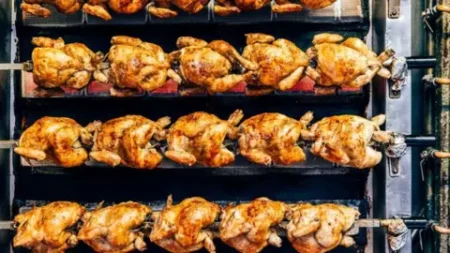
The anticipated influx of agricultural products from South America, specifically beef, chicken, and sugar at discounted prices, poses a threat to French farmers who may find themselves unable to compete with lower-cost imports. Simultaneously, European industries—cars, clothing, and fine wines—are expected to receive increased access to Mercosur nations, creating a complex trade dynamic. To successfully block the deal, France would need the collaboration of at least three other EU countries that, together, represent a minimum of 35% of the EU’s population. Ireland, Poland, and Austria have shown discontent, but the pivotal role Italy plays remains uncertain as conflicting reports circulate regarding its stance on the agreement.
Further intensifying the situation is French President Emmanuel Macron’s acknowledgment of farmers’ concerns, labeling the trade agreement “unacceptable in its current form.” Despite this, many within the agricultural community continue to push for an outright rejection of the deal, highlighting the perceived imbalances it would create. They contend that farmers in countries like Brazil and Argentina have fewer restrictions on pesticides and can operate with lower labor costs, undermining the integrity of their French counterparts’ work.
Demonstrations across France have illustrated the farmers’ mounting frustrations. In a notable protest, approximately 200 farmers descended upon Paris, strategically dumping straw outside the Grand Palais museum. Their provocative actions, including the lighting of red flares and chanting slogans emphasizing the importance of agriculture, sought to capture public and government attention.
While French farmers strongly oppose the trade deal, other EU member nations like Germany, Spain, and Portugal advocate for it. Proponents of the agreement argue that it stands as a countermeasure to the rising tide of protectionism witnessed globally, especially with Trump’s re-election as President of the United States. Notably, proponents argue that the anticipated benefits to the economy might offset potential losses in the agricultural sector.
Experts offer a range of perspectives concerning the implications of the deal. Some, like Uri Dadush, a trade policy professor at the University of Maryland, admit that while European farmers will face tighter competition, the expected disruptions will be relatively marginal due to the carefully regulated quotas. Others suggest that via such agreements, Europe can initiate essential reforms within its agri-food sector to remain competitive.
However, skepticism remains prevalent. Analysts such as David Cayla of Angers University express doubt about the EU’s actual capability to enforce health and environmental standards in Mercosur nations. The fear largely revolves around the notion that European farmers may find themselves contending with superior climatic conditions and agricultural practices inherent to their South American counterparts.
In the backdrop, anecdotes from farmers like Antoine Gomel, who has taken over his family farm, highlight broader socio-economic challenges within rural France. Farmers argue that the collective survival of these agricultural operations is intrinsically linked to the vibrancy of local communities. They lament the gradual encroachment of urbanization and industry, which threatens to extinguish centuries of rural traditions and livelihoods.
Ultimately, as the date for the vote draws nearer in 2025, the divide within Europe regarding the EU-Mercosur agreement continues to widen. While some advocate for the opportunities it presents, others decry the potential detriment to local economies. The outcomes of the negotiations could set precedent not only for trade but also for the future of farming across the continent. As French farmers continue to mobilize their opposition, the difficult balance between free trade and protecting local agriculture remains a pressing issue for policymakers in the EU and beyond.