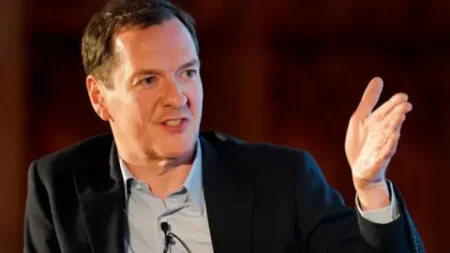




Mark Carney, known as the “unreliable boyfriend” during his tenure as Governor of the Bank of England, is gearing up for a political journey upon returning to Canada. He is currently in the race for the leadership of the Liberal Party, a position rife with challenges, especially as he steps into an arena overshadowed by political controversies and economic uncertainties. Carney’s time in London as head of the UK’s central bank from 2013 to 2020 gives substantial insight into how he may navigate the intricate landscape of Canadian politics, particularly as he approaches a potential role as Prime Minister.
Mark Carney’s groundbreaking appointment as the first non-British governor of the Bank of England marked a milestone in the institution’s 300-year history. Prior to taking his London post, Carney had established his credentials at the Bank of Canada during a critical period leading to the Great Financial Crisis. This earlier role was marked by an adept handling of economic turmoil, showcasing his capabilities to stabilize and regulate financial systems in times of crisis. His connections to the UK were deepen by his academic pursuits at the prestigious Oxford University, which, alongside his marriage to an English woman, grounded his personal ties to the country.
Once in London, Carney implemented meaningful reforms aimed at modernizing the Bank’s operations, a legacy that echoes particularly in the regulatory measures adopted post-financial crisis. He oversaw the reallocation of financial regulatory duties to the Bank of England after the dissolution of the Financial Services Authority, a significant structural transformation aimed at enhancing financial oversight. Carney’s transparency in communication was notably different from his predecessors, with regular media engagements that helped demystify the Bank’s role and decisions.
Carney’s tenure was characterized by notable policies such as the reduction of the number of annual interest rate meetings and the introduction of “forward guidance.” This was a strategy designed to foster economic growth by assuring markets that interest rates would remain low until certain economic conditions—like unemployment dropping below 7%—were met. However, this approach attracted criticism and led to him being labeled as an “unreliable boyfriend,” a metaphor that reflected the perceived inconsistency in his policies.
Beyond monetary policy, Carney attracted attention for his interventions regarding significant constitutional referendums. Prior to the Scottish independence referendum in 2014, he warned that adopting the pound in an independent Scotland could require relinquishing certain economic powers to the UK. This public stance foreshadowed a series of proactive measures in the lead-up to the Brexit referendum, where he publicly lamented the economic ramifications of leaving the European Union, predicting potential recession outcomes.
When the Brexit results became public, Carney’s immediate response aimed to quell fears surrounding the financial sector’s stability. He made a public address affirming that contingency plans developed by the Bank would maintain operational integrity in the face of market upheaval; a moment he later described as one of his toughest days in office. His leadership resulted in immediate actions such as cutting interest rates and reinstating the quantitative easing program to buffer the economy against emerging shocks.
As Carney transitions back to Canada, his experiences dealing with international dynamics, particularly his interactions with Donald Trump and roles within various international financial boards, like the Financial Stability Board, place him in a unique position. He has accumulated skills that would serve him well in navigating complex political landscapes, especially in terms of international relations and economic policy — crucial skills for any leader facing the challenges of the global political arena.
Moreover, Carney has embraced environmental sustainability, stepping into a post as a UN Special Envoy for Climate Change, reflecting his vision for balancing fiscal and ecological responsibilities. His establishment of the Glasgow Financial Alliance for Net Zero underlines his commitment to promoting initiatives that combat climate change through the financial sector.
In conclusion, Mark Carney’s unique background—ranging from his technical expertise in economic policy to his profound engagement with global issues—positions him as a formidable candidate for Liberal leadership. Canada may yet see a transformative political journey from an economic steward to a national leader, shaped significantly by his rich history at the helm of the Bank of England.