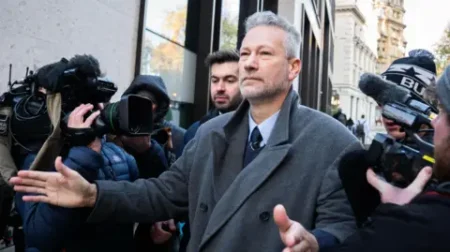




Rudy Giuliani, a former mayor of New York City and attorney to ex-President Donald Trump, has recently reached a significant settlement with two Georgia election workers, Ruby Freeman and Shaye Moss, whom he had defamed. This agreement marks the end of a prolonged legal battle, which began after the tumultuous 2020 presidential election. The settlement allows Giuliani to retain his primary belongings and his properties, addressing the nearly $150 million judgment against him with terms favorable enough for him to maintain a degree of his previous lifestyle.
The crux of the conflict lies in the fallout from Giuliani’s unfounded assertions regarding Freeman and Moss’s involvement in election fraud. As Trump’s attorney during this period, Giuliani made claims that the two women were part of a conspiracy to manipulate election results, which they vehemently denied. After years of tumultuous litigation, Freeman and Moss expressed relief at the settlement, stating that the past four years had been a “living nightmare.” They emphasized the importance of clearing their names and restoring their reputations as they can now proceed with their lives following this resolution.
As part of the settlement, Freeman and Moss relinquished claims to some of Giuliani’s possessions, allowing him to keep his Florida condominium and his collection of New York Yankees World Series rings. Previously, under court orders, Freeman and Moss were awarded many of Giuliani’s valuable items, including a $6 million Manhattan apartment and a lavish assortment of luxury watches. Despite these victories in court, the execution of these judgments proved challenging, as Giuliani had been reluctant to comply with the orders to turn over his possessions.
Giuliani broke his silence on the settlement through a post on social media platform X, declaring that he would retain all personal belongings that Freeman and Moss had pursued. He claimed that the resolution did not indicate any admission of wrongdoing on his part or the plaintiffs. Furthermore, he expressed a mutual agreement with Freeman and Moss not to engage in any defamatory discourse regarding one another, urging others to refrain from doing so as well.
Despite having a net worth estimated at around $10 million, Giuliani’s financial situation has raised concerns about whether Freeman and Moss could ever fully collect on the $150 million judgment. Challenges loomed over the collection of appropriate compensatory amounts that would address even basic debts, even with their attorneys working pro bono and seeking to recover costs linked to the legal proceedings. However, outside the courtroom, inquiries into the specific terms of the settlement remained largely unanswered, with Giuliani’s attorney, Joseph Cammarata, refraining from divulging any details, including the potential financial settlement involved.
As the court drama unfolded, Trump made efforts to show support for Giuliani, urging his followers to “SAVE RUDY!!!” on social media. Meanwhile, Giuliani has faced increasing pressure from ongoing court mandates and has recently been found in contempt of court on two occasions, underscoring the challenges he has faced alongside his ongoing legal burdens.
In addition to these legal challenges, there have been reports of Giuliani grappling with significant health concerns in recent months. Despite the tumult, he stated intentions to attend events linked to Trump’s upcoming second presidential inauguration. On the scheduled day of his trial, he posted a light-hearted video on social media, showcasing a small dog at Trump’s Mar-a-Lago Club, aiming to convey cheer amid serious legal troubles. His post included a touch of humor with a cheerful song playing in the background, perhaps as part of an effort to maintain a positive public image as he navigates his strikingly complex circumstances.
The developments surrounding the Giuliani-Freeman-Moss case encapsulate a significant chapter in the ongoing narrative of election-related legal disputes stemming from the 2020 election and underscore the prolonged implications these cases hold for all parties involved. This evolving story continues to capture attention as it highlights the intersection of law, politics, and personal reputation.