
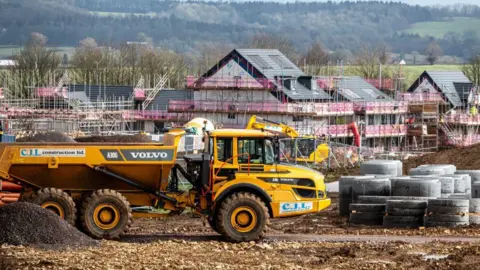
The recent decision by the UK government to roll back nature protections has elicited significant controversy and concern from environmentalists and conservation groups alike. This policy shift, announced recently, aims to facilitate housing development by exempting more projects from the obligations of the Biodiversity Net Gain (BNG) guidelines, which require builders to actively enhance local wildlife habitats. The government’s rationale centers around the pressing housing crisis, with a stated goal of constructing 1.5 million new homes during the current parliamentary term.
Under the existing BNG scheme, developers are mandated to increase biodiversity by 10% in relation to their projects, a policy credited as one of the most significant advancements in nature protection in the last few decades. However, critics argue that the government’s latest adjustments will undermine these vital principles. Eco-groups are alarmed not only by the increase in the size of exempted developments but also by the perception that the government is prioritizing residential construction over ecological integrity. Environmental advocates warn that these changes threaten to stymie progress on biodiversity recovery, and they express a shared belief that the exemptions are too generous, risking detrimental environmental impacts.
Matthew Pennycook, the Minister of State for Housing, defended the government’s reforms, arguing they are necessary to tackle what he described as a housing crisis—one that has reached emergency levels in some regions. The reforms propose giving a “default yes” for planning applications adjacent to railway stations, including those situated on green belt land, and mandate that all new constructions include wildlife-friendly installations such as swift bricks. Critics, however, have described this approach as an abandonment of sustainable development, warning it may pit the demands for new homes against necessary environmental protections.
The adjustments to the BNG rules mean that development projects under 2,000 square meters will be largely exempt from biodiversity compensations—an estimate indicating that this change could facilitate approximately 12,500 new homes annually. Prior proposals had considered raising the threshold even higher, up to 10,000 square meters, which would have considerably broadened the scope of exempted developments. This aspect of the policy is particularly contentious, as experts lament the diminishing requirement for developers to contribute to ecological restoration and improvement.
Richard Benwell, the CEO of Wildlife and Countryside Link, emphasized that these reforms may hollow out the BNG framework, marking a retreat from one of the most promising regulations aimed at nature recovery. He cautioned that while the exemptive changes are more restrained than previous proposals, they still represent a significant departure from the UK’s commitment to environmental protection. In similar veins, Craig Bennett, chief executive of the Wildlife Trusts, accused the government of scapegoating natural conservation efforts in order to address economic challenges, suggesting that public sentiment leans toward a comprehensive strategy that advances both development and environmental stewardship.
Responses to these regulatory changes underscore a divisive discourse on development priorities. The construction industry, represented by Rico Wojtulewicz from the National Federation of Builders, suggests that prior biodiversity mandates had complicated and inflated costs for projects. As a solution, government discussions are set to include expanding exemptions for brownfield sites as well, which could further complicate the reconciliatory balance needed between housing demands and ecological support.
In summary, the government’s decision to ease biodiversity protections appears to be a double-edged sword, aiming to boost housing development while simultaneously raising the specter of ecological degradation. The broader implications of rolling back protections stand to potentially undo hard-fought gains in nature conservation, a rift that could deepen the divide between development and environmental advocacy. As these conversations unfold, the stakes remain high for both the housing crisis and the health of the environment.