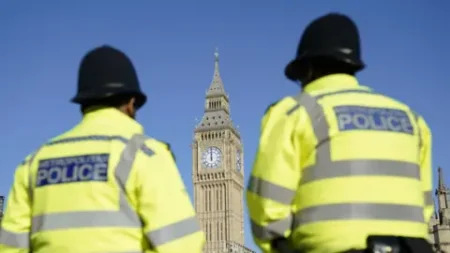



In a significant incident drawing international attention, the co-executive director of Greenpeace UK, Will McCallum, has been apprehended following a demonstration that involved dyeing water red outside the US Embassy in London. This act of civil disobedience was part of a protest against the United States’ arms sales to Israel amidst ongoing conflicts in the region. The event has raised concerns about environmental impacts and the rights to protest, highlighting the contentious nature of activism today.
Greenpeace reported that McCallum was among six individuals taken into custody after they reportedly discharged 300 litres of a non-toxic, food-grade dye into a water feature at the embassy, intended to symbolize the violence and suffering occurring in Gaza due to military actions attributed to US support for Israel. The Metropolitan Police stated that they arrested the group on suspicions of criminal damage and conspiracy to cause criminal damage. The embassy responded strongly, asserting that the protest not only wasted a significant water supply but also resulted in damage to their property.
The embassy’s spokesperson emphasized that, while they respect peaceful demonstrations, they unequivocally condemned acts that lead to property damage or environmental waste. Their statement specifically mentioned the disruption this action posed to a water supply of 1.5 million gallons, stressing its potential harm to local environmental resources.
Despite the criticism, Greenpeace UK maintained that the dye used for the protest posed no threat to people, wildlife, or the environment, aiming to convey a message rather than cause any substantial harm. According to police reports, the group began their protest around 07:30 BST when officers observed activists adding the dye to the pond, which is one of the water features surrounding the embassy. Moreover, the pond is accessible to the public, and authorities clarified that there had been no breach of the embassy’s secure perimeter during the protest.
As Greenpeace UK elaborated on their motives, the organization expressed deep concern about the humanitarian crisis in Gaza, attributing numerous deaths and vast destruction to the continuous supply of arms and military support provided by the US to Israel. They characterized McCallum’s arrest and the detainment of surrounding activists as part of a broader trend of suppressing the right to protest within the UK, thereby igniting a debate over civil liberties and environmental activism.
The geopolitical context of the protest cannot be overlooked. Following escalated tensions that peaked with a devastating cross-border attack by Hamas on October 7, 2023, which killed around 1,200 individuals in Israel, Israel’s military has ramped up their operational responses in Gaza. Since that time, there have been reports from sources, including the Hamas-run health ministry, indicating the death toll in Gaza has surged to over 50,000, highlighting the dire consequences of ongoing military engagement.
Amidst these fragile dynamics, the US remains the predominant supplier of military aid to Israel, particularly as Israel resumes its aerial bombardment against Hamas, further complicating the ongoing humanitarian crisis. The tensions between the two parties have reached a boiling point, with both sides blaming each other for the collapse of a previous ceasefire, which underscores the challenges peace initiatives face in the region.
In sum, the arrest of Greenpeace UK’s Will McCallum amid a vivid protest against US arms sales to Israel is emblematic of larger struggles at the intersection of environmentalism, human rights, and international relations. While the protest sought to draw attention to critical humanitarian issues, it has simultaneously sparked debates around the legality and morality of protest tactics, raising questions about the balance between activism and maintaining public order. The unfolding events continue to be closely monitored, as they not only impact local discussions in the UK but also resonate internationally as part of a broader discourse on human rights and environmental protection.