


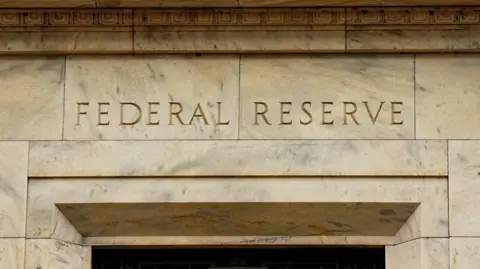
The search for a new leader of the United States central bank, the Federal Reserve, has entered a critical phase as President Donald Trump is anticipated to name a successor to Jerome Powell, whose term concludes in May. This highly impactful decision is one that will undoubtedly shape U.S. monetary policy during a tumultuous economic period. The incoming chair of the Fed will walk into a complex landscape characterized by balancing internal dissent regarding interest rate strategies and external political pressures. Indeed, President Trump’s explicit desire for lower borrowing rates has sparked concerns about whether a new appointee would maintain the autonomy intricately tied to the role of the Fed.
With inflation worrying many economists, the significance of this role cannot be overstated. Trump’s nominee must navigate not only economic realities but also the considerable expectations from the administration and Capitol Hill. Following the nomination, all contenders will be subjected to Senate confirmation, making the choice even more crucial. The competitive landscape has emerged, and several potential frontrunners have been identified.
One of the leading candidates is **Kevin Hassett**, a staunch supporter of President Trump and a seasoned economist with deep roots in conservative economic policy. Hassett’s role as the chair of the White House Council of Economic Advisers during Trump’s initial term has positioned him prominently within this selection process. At 63 years old, his odds of being named have fluctuated, with some Wall Street observers still considering him the frontrunner despite a dip in confidence among traders.
Though well liked within the Trump administration, questions about his capacity to operate independently have been raised. Hassett’s tendency to dismiss weakening economic indicators and persistently advocate for the administration’s narrative has drawn skepticism regarding his potential alignment with broader economic considerations at the Fed. As a Deutsche Bank report indicated, achieving consensus with other policymakers may prove challenging if he leans excessively on the idea that administration policies can quell inflationary pressures.
Another noteworthy contender is **Kevin Warsh**, who previously served as a Fed governor from 2006 to 2011. Warsh, now 55 years old, has recently surged in visibility and was even seen overtaking Hassett in some speculations, although he subsequently fell back. His outspoken criticism of the Fed’s current practices has evolved into a spate of “regime change” rhetoric as he vies for the position. The balance Warsh struck as a former governor was typically hawkish, favoring higher rates to combat inflation. However, his recent stances imply a pivot towards supporting rate cuts, raising questions among financial analysts about his logical consistency.
A valuable asset for Warsh may be his ties to Trump’s inner circle, specifically through familial connections as his father-in-law is a prominent donor to Trump’s political endeavors. This relational footprint could potentially catapult him higher on the list of candidates.
**Christopher Waller**, a current Fed governor, is also considered a strong candidate. Nominated by Trump in 2020, Waller’s recent discussions with the president have enhanced his position significantly. Known for promoting the consideration that more room exists for rate reductions, he may be viewed favorably by Wall Street due to his existing distances from the political machinations at the White House. His longstanding tenure at the Fed may play a decisive role in solidifying his candidacy.
Even as the race for the Fed chair intensifies, other names are surfacing, including financial executives with strong backgrounds in economics and finance. Rick Reider of BlackRock and Treasury Secretary Scott Bessent have also been mentioned as potential successors, indicating a wider net being cast in this high-stakes decision-making process.
Ultimately, the choice for the new Fed chair encapsulates more than aligning with Trump’s vision; it compasses the broader economic implications that will bear significant impacts on citizens and businesses across the nation. Regardless of who proceeds as the chosen candidate, it will be the market and economic performance over time that will ratify the accuracy of this pivotal decision. The enormity of the task ahead is indicative of the weighty responsibilities that lie within such a critical national position.