


The article titled “Will tech trump tradition at bakers and biscuit makers?” explores the ongoing tension in the baking industry between traditional methods and modern technological advancements. As consumers’ demands evolve and businesses seek to remain competitive, bakers and biscuit manufacturers find themselves at a crossroads where innovation and heritage converge.
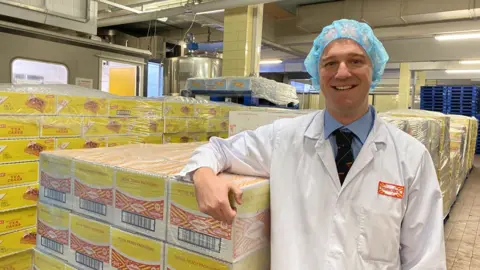
At the forefront of the discussion is the Tunnock’s factory, located just outside Glasgow, where the production of wafer biscuits involves intricate processes that balance craftsmanship with efficiency. The factory is known for its signature caramel that flows from the second to the first floor through conveyor belts, filling the facility with a rich, sweet aroma. Stuart Louden, the engineering and transport manager at Tunnock’s, shares insights into the labor-intensive caramel preparation. Approximately 20 tonnes of caramel are produced each day, accompanied by a meticulous quality assurance process conducted by human operators who rely on their experience and intuition to assess the caramel’s consistency.
While the caramel production process remains decidedly manual, Tunnock’s embraces automation in other areas of its operation. Louden recognizes the competitive pressure from snack giants like McVitie’s and Fox’s, emphasizing the need for advanced machinery to sustain output. Although machines run during the night to assist in the caramel-spreading process, the flexibility and space efficiency of human labor remain indispensable. Combined, the machines and skilled workers enable Tunnock’s to produce an impressive seven million wafer bars and 4.5 million tea cakes each year.
The balance between tradition and efficiency is further illustrated in the realm of marshmallow production, which, like caramel, is closely monitored by human hands. Interestingly, Tunnock’s choice to wrap its wafer bars using a folding technique instead of sealing represents a conscious decision to prioritize a nostalgic experience for consumers. Louden notes that when someone revisits the taste of a Tunnock’s caramel wafer after years, it reignites cherished memories from their childhood, preserving the emotional connection with the product.
The industry is also witnessing innovations in equipment that cater specifically to the baking sector. For instance, Canada’s Unifiller has developed a robot arm named HIRO, designed for cake decoration. The machine aims to streamline efficiency while handling various toppings, including sticky caramel. Derek Lanoville from Coperion emphasizes the challenges posed by hygiene regulations and the necessity for equipment to be easy to clean. Additionally, the inherent unpredictability of baked goods poses another complication, as cakes may differ in size and shape, requiring adaptable machinery.
Human touch remains invaluable to the baking process. Anomarel Ogen, the head baker at The Bread Factory in London, believes that certain artisanal techniques cannot yet be replicated by machines. His bakery, which operates around the clock, produces vast quantities of sourdough loaves using sustainable ingredients. Ogen underlines the importance of skilled workers who can delicately shape dough, highlighting a tradition of craftsmanship that adds unmatched value to their products. The ability to monitor and adjust the baking process in response to changes in ingredients or recipes further underscores the importance of human involvement.
As the implementation of new technologies continues, industry experts suggest adopting a hybrid model that integrates automation while retaining the authenticity of handmade products. Craig Le Clair, a principal analyst at Forrester, advocates for a cautious approach, where automation enhances consistency and volume in areas where it benefits production without overshadowing the personal touch integral to the craft.
Coperion’s Lanoville intends to enhance the functionality of the HIRO robot arm by focusing on scanning and safety systems, allowing bakers to work without interference. Meanwhile, Louden at Tunnock’s faces the challenge of navigating fluctuations in cocoa prices while contemplating significant investments in equipment. The choice to delay new initiatives reflects a prudent approach amidst financial uncertainty, as the company strives to persevere through such economic challenges.
In conclusion, the article poses essential questions about the future of the baking industry: Can manufacturers effectively leverage technology without sacrificing tradition? As the dialogue continues, what remains clear is that a fusion of time-honored practices and cutting-edge automation may hold the key to meeting the evolving demands of consumers while honoring the rich heritage of baking.