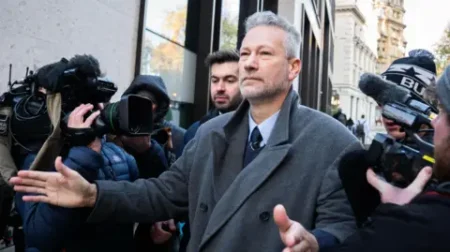



The recent incident involving MP Mike Amesbury has sent shockwaves through political circles and the wider public. Amesbury, who represents the Runcorn and Helsby constituencies as part of the Labour Party, has officially admitted to assault by beating. This admission follows the emergence of a stark video capturing the altercation, wherein Amesbury can be seen punching a man to the ground during a confrontation in Frodsham, Cheshire. The visuals from the event, which took place in the early hours of 26 October 2022, have raised serious concerns around the conduct of public figures.
The altercation unfolded at approximately 02:45 BST, and part of the video displayed Amesbury angrily shouting, “You won’t threaten the MP ever again, will you?” This statement hints at a narrative of perceived provocation leading to the physical response from the MP, though details regarding the exact circumstances that preceded the clash remain unclear due to the footage’s lack of context. Such incidents involving elected officials place them under intense scrutiny, significantly affecting their public image and standing, as well as that of the political party they represent.
In the wake of the video being brought to light, Amesbury’s actions led to his suspension from the Labour Party. As parliamentary protocol often dictates, political parties take swift action in response to any behavior that can be construed as violent or unethical. Consequently, this has shifted Amesbury’s status; he now sits as an independent MP, having lost his affiliation with the party that propelled him into office. This turn of events inevitably raises questions regarding the integrity and conduct expected of all public representatives.
During a session at Chester Magistrates’ Court, Amesbury accepted responsibility for his actions in front of the magistrate, pleading guilty to the assault charge involving a victim identified as a 45-year-old man. The court proceedings outline the legal ramifications of such behavior, and the consequences that public figures can face when they step outside the bounds of lawful conduct. The case serves as a critical reminder of the need for MPs to uphold their positions with a level of decorum reflective of their responsibilities.
Amesbury’s political career began gaining traction in 2017 when he was elected to his seat, and he subsequently served as a shadow minister until early 2024. Notably, he had a substantial majority of 14,696 votes when he was last elected in the general election. His journey, however, appears to have taken an unfortunate turn, as this incident not only impacts his career but also reflects on the party ideals he once represented. It underscores a concerning trend that political leaders are not immune from human error or misconduct, which complicates public trust and the reliability of those in elected positions.
At present, this story is categorized as breaking news and is actively being updated as more details are made available. It highlights the imperative for transparency in reporting incidents that shake the foundations of public trust. For those interested in staying informed, various channels are available, including the BBC News App and following specific social media handles for real-time alerts covering ongoing developments related to this case.
As public sentiment evolves in reaction to such incidents, the broader implications for both Amesbury and the Labour Party continue to unfold, adding layers to an already complex political narrative. The incident not only raises questions about accountability among MPs but also invites a broader conversation regarding appropriate conduct in political discourse and the responsibilities of public figures to maintain a positive public image.